How to Grow Lettuce: From Seed to Harvest Faster Than You Think
Want fresh, crunchy greens on demand? Lettuce is one of the fastest, easiest crops you can grow. In cool weather, it goes from seed to salad bowl in as little as 30–50 days, whether you’re gardening in beds, raised planters, or containers. This guide covers everything you need to know when to plant, how to sow, watering and feeding, common problems, and the right time to harvest for the best flavor and texture.
- Quick Start: The Basics of How to Grow Lettuce
- Choose the Right Lettuce Type for Your Climate and Plate
- When to Plant Lettuce (By Season and USDA Zone)
- Soil Preparation and Bed Setup
- How to Plant Lettuce: Seeds and Transplants
- Spacing Guide by Type
- Watering and Mulching for Tender, Non-Bitter Leaves
- Fertilizing: Light Feeders Still Need Fuel
- Temperature, Sun, and Heat Protection
- Common Problems and How to Prevent Them
- Growing Lettuce in Containers
- Succession Planting for Continuous Harvests
- When and How to Harvest Lettuce
- Saving Lettuce Seed (Advanced)
- Smart Season Extensions
- Variety Recommendations to Try
- Frequently Asked Questions
- Conclusion: Reliable Greens, Nearly Year-Round
Quick Start: The Basics of How to Grow Lettuce
- Best seasons: Cool weather spring and fall. Ideal temps are 60–70°F days; growth slows and bitterness rises in heat.
- Sunlight: 4–6 hours of sun; partial shade helps prevent bolting in warm regions.
- Soil: Loose, well-drained, rich in organic matter; pH 6.0–7.0.
- Water: Keep evenly moist; don’t let soil dry out.
- Spacing: Leaf lettuce 6–10 inches apart; romaine 10–12 inches; head types 10–12 inches.
- Harvest: Baby leaves in 25–35 days; full heads in 45–70 days depending on type.
Choose the Right Lettuce Type for Your Climate and Plate
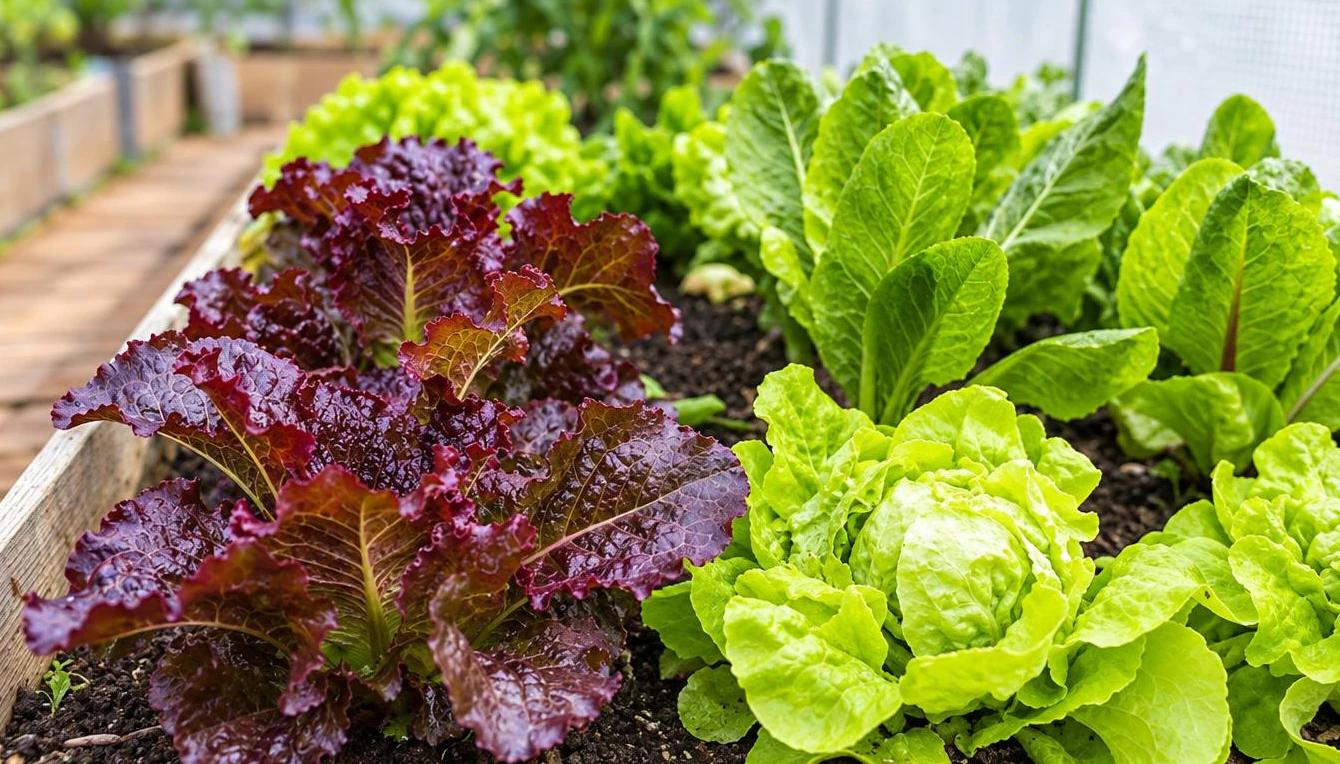
Selecting varieties that fit your climate and kitchen is half the battle. Lettuce falls into a few main groups:
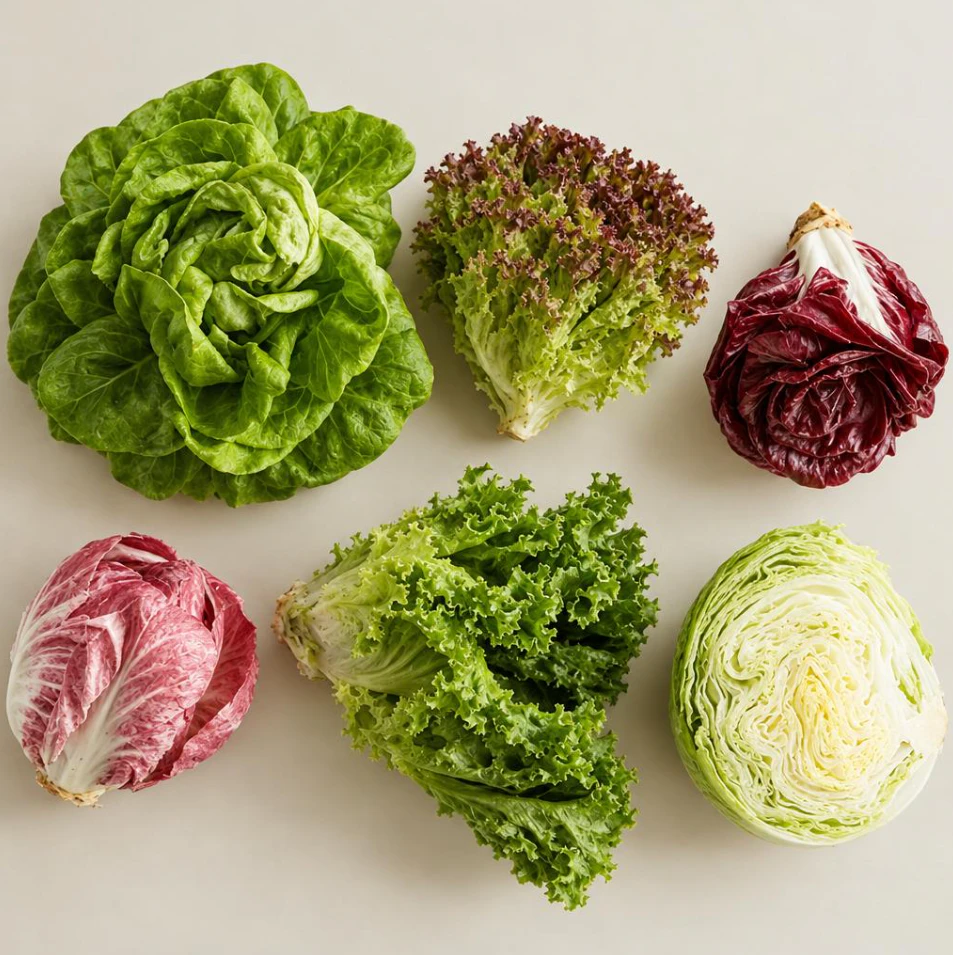
- Leaf (looseleaf): Fast, forgiving, and great for cut-and-come-again harvests. Examples: Black Seeded Simpson, Red Sails.
- Romaine (cos): Upright heads with crunchy ribs; good heat tolerance compared to other types. Examples: Parris Island Cos, Little Gem.
- Butterhead (Bibb/Boston): Tender, sweet leaves with soft heads. Examples: Buttercrunch, Tom Thumb.
- Crisphead (iceberg/batavia): Tight, crunchy heads; often slower and fussier, but batavia types handle warmth better. Examples: Iceberg, Nevada (batavia).
- Cut-and-come-again mixes (mesclun/baby leaf blends): Rapid harvest; sow densely and clip often.
Related: How to Grow a Fall Container Garden: What to Plant in September, October & November
Growing where summers warm up early? Look for “bolt-resistant,” “heat-tolerant,” or batavia/romaine varieties. Cooler coastal or mountain climates can handle butterhead and crisphead more easily.
When to Plant Lettuce (By Season and USDA Zone)
Lettuce prefers cool weather and can handle light frosts once established. Timing depends on your last/first frost dates.
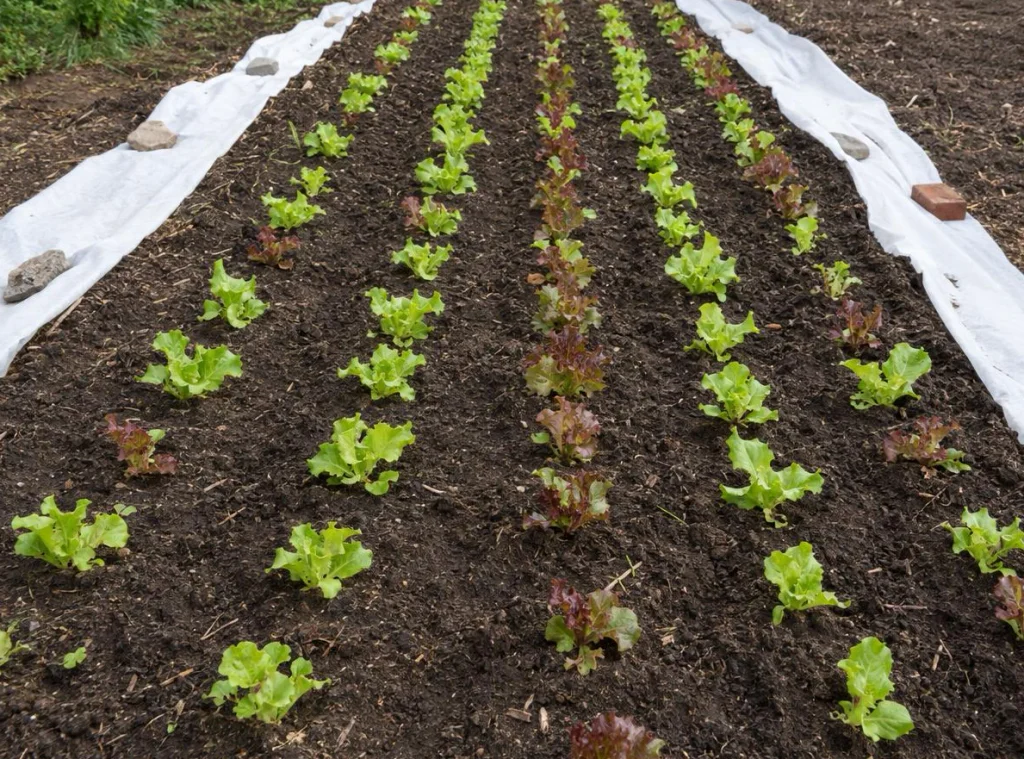
- Spring: Sow outdoors 2–4 weeks before your average last spring frost. Start indoors 3–4 weeks before transplanting if you want a head start.
- Fall: Sow 6–8 weeks before first fall frost for mature heads, or 4–6 weeks for baby leaf. In hot-summer areas, start seeds indoors and transplant once nights cool.
- Winter growing (mild climates or protected structures): In zones 8–10, plant through winter with row cover. In colder zones, grow under low tunnels, cold frames, or in a greenhouse.
Soil temperatures of 40–75°F will germinate most lettuce; the sweet spot is 60–68°F. Very warm soils can inhibit germination in some varieties.
Soil Preparation and Bed Setup
Lettuce has shallow roots and thrives in loose, fertile soil that holds moisture but drains well.
- Amend generously: Work in 1–2 inches of finished compost before planting. This improves texture, nutrients, and water-holding capacity.
- pH: Aim for 6.0–7.0. If you suspect acidity, a soil test can guide liming needs.
- Raised beds and containers: Ideal for spring/fall planting because they drain well and warm quickly. For containers, use a high-quality potting mix (not garden soil).
How to Plant Lettuce: Seeds and Transplants
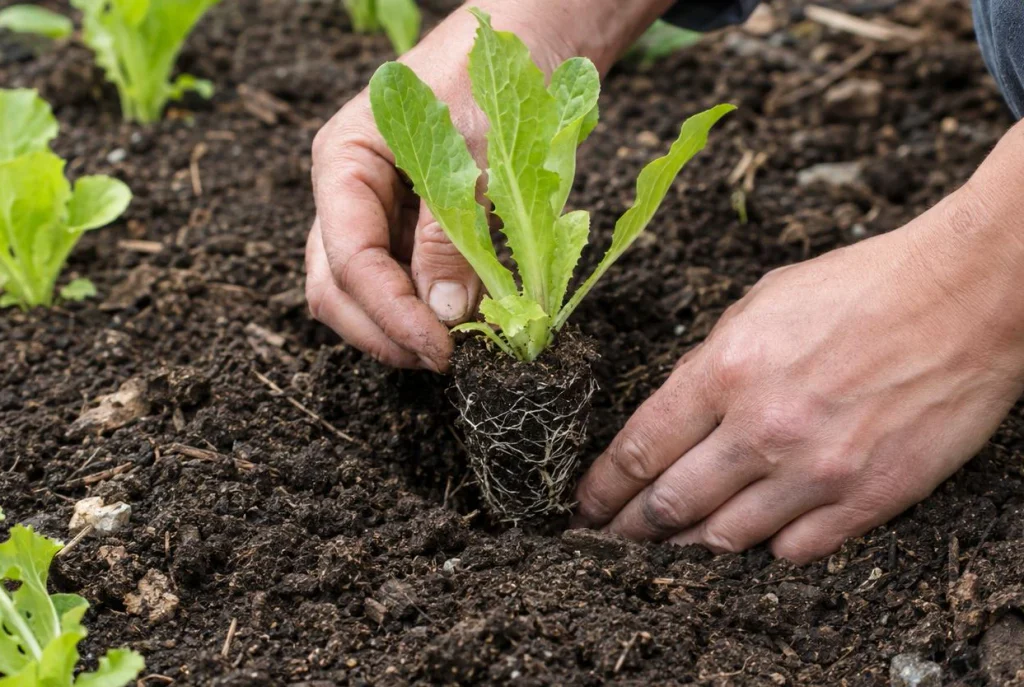
Direct Sowing
- Prepare the surface: Rake the top inch to a fine, level tilth. Remove clumps; tiny seeds need good seed-to-soil contact.
- Sow shallow: Plant seeds 1/8–1/4 inch deep. Light aids germination for many types; don’t bury deeply.
- Spacing: For baby leaf, broadcast densely or plant in 2–4 inch spacing and thin by harvesting. For heads, space 6–12 inches apart in rows 12–18 inches apart depending on type.
- Water gently: Mist or use a watering rose so seeds don’t wash away. Keep evenly moist until established.
Starting Indoors and Transplanting
- Start 3–4 weeks before planting out: Use cell trays or soil blocks. Sow 1–2 seeds per cell; thin to the strongest seedling.
- Light and temperature: Provide bright light (grow lights 14–16 hours/day). Ideal germination/growth temperatures are 60–70°F.
- Harden off: Acclimate seedlings outdoors for 4–7 days before transplanting.
- Transplant depth: Plant at the same depth as in the tray; avoid burying the crown.
Spacing Guide by Type
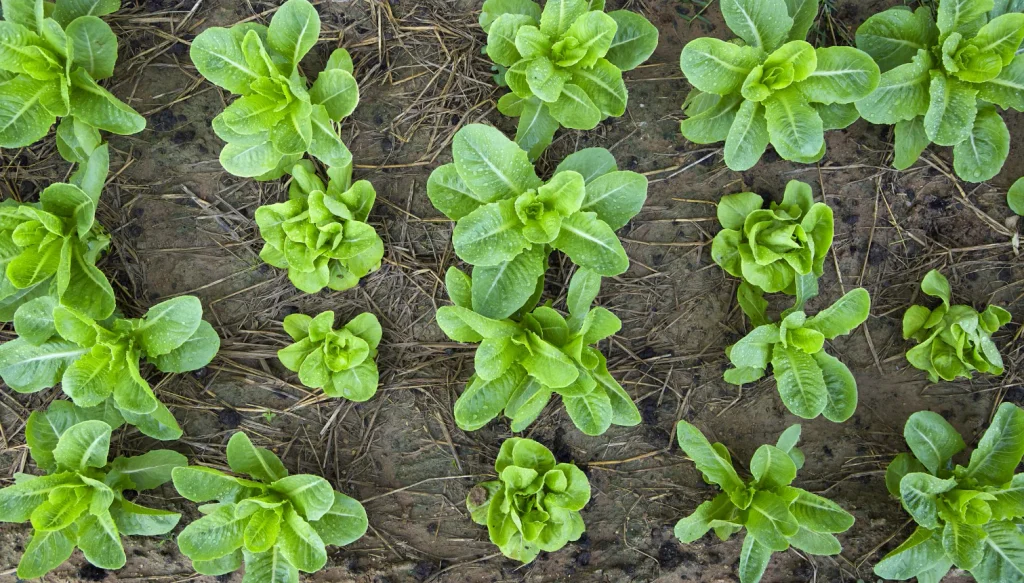
- Leaf (looseleaf): 6–10 inches apart; rows 12–18 inches apart.
- Romaine: 10–12 inches apart.
- Butterhead: 8–10 inches apart.
- Crisphead/batavia: 10–12 inches apart.
- Baby leaf mixes: Sow densely in bands or broadcast; thin by cutting.
Thin seedlings promptly to prevent crowding and disease. Use thinnings as microgreens.
Watering and Mulching for Tender, Non-Bitter Leaves
Consistent moisture is your best tool for mild, crisp lettuce.
- Keep evenly moist: Aim for 1 inch of water per week in cool weather; closer to 1.5 inches in warmer, windy conditions. Adjust for rainfall.
- Morning watering: Helps leaves dry quickly and reduces foliar disease.
- Mulch: A thin layer of clean straw or shredded leaves helps regulate soil temperature and moisture, and keeps grit off leaves.
- Avoid water stress: Fluctuations (dry, then soaked) can trigger bitterness and early bolting.
Fertilizing: Light Feeders Still Need Fuel
Lettuce uses steady, modest nutrition.
- Pre-plant: Compost is often enough. In poor soils, mix in a balanced organic fertilizer per label rates.
- Side-dress: If growth slows or leaves pale, side-dress with compost or a diluted, nitrogen-leaning organic fertilizer (e.g., fish or seaweed) 3–4 weeks after planting.
- Avoid heavy nitrogen late: Over-fertilizing can produce soft growth prone to pests and tipburn.
Temperature, Sun, and Heat Protection
- Sun: 4–6 hours of direct sun is enough. In warm climates or late spring, provide afternoon shade.
- Heat management: Use shade cloth (30–40%), plant on the east side of taller crops, or tuck transplants into partial shade.
- Succession sowing: Sow small amounts every 1–2 weeks to maintain harvests and dodge heat waves.
Common Problems and How to Prevent Them
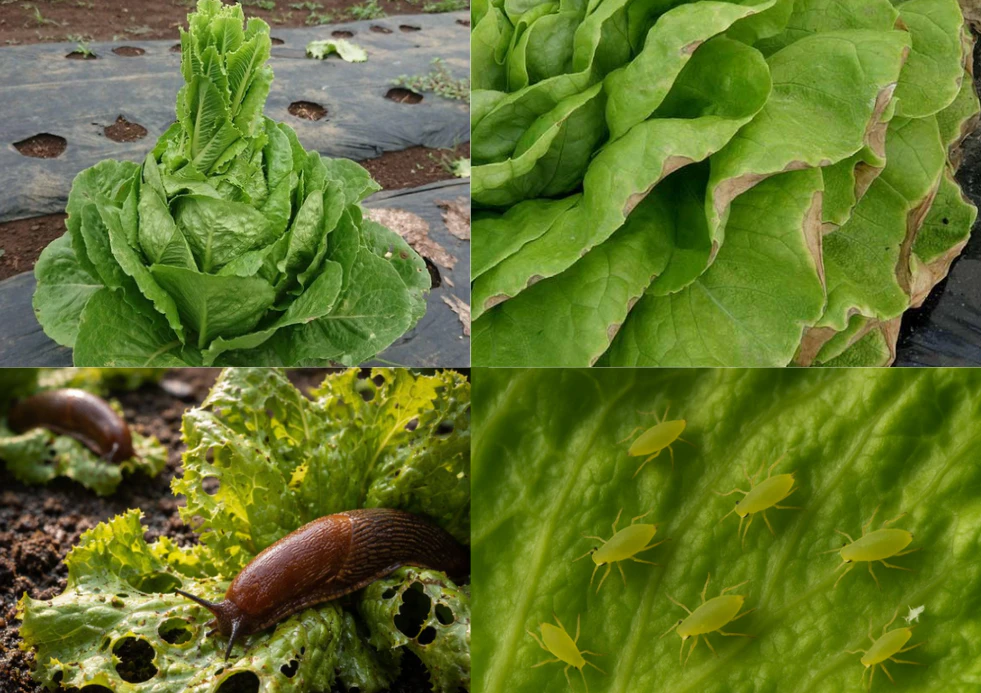
Bolting (Premature Flowering)
Symptoms: Central stalk elongates; leaves turn bitter.
Causes: Heat, long days, water stress, crowded roots.
Prevention: Plant early/late in the season, choose bolt-resistant varieties, keep soil moist, provide shade in heat.
Tipburn
Symptoms: Brown, necrotic edges inside heads, especially in fast-growing types.
Cause: Rapid growth plus uneven moisture/calcium transport not usually a soil calcium shortage.
Prevention: Steady watering, avoid sudden surges of fertilizer, provide moderate growth conditions.
Downy Mildew and Leaf Spots
Symptoms: Pale or yellow patches with fuzzy growth underneath (downy mildew); small spots for other leaf diseases.
Prevention: Choose resistant varieties, improve airflow with proper spacing, water early at soil level, rotate beds yearly. Remove heavily infected plants.
Slugs and Snails
Damage: Ragged holes, slime trails.
Control: Hand-pick at dusk, use beer traps or iron phosphate baits as labeled, reduce hiding spots, and water in the morning to keep surfaces drier overnight.
Aphids
Damage: Curling, sticky honeydew.
Control: Blast with water, encourage beneficials, use insecticidal soap or horticultural oil per label. Avoid over-fertilizing with nitrogen.
Caterpillars (Loopers, Armyworms)
Damage: Chewed leaves and frass.
Control: Hand-pick; use Bt (Bacillus thuringiensis kurstaki) on young larvae per label; cover beds with row cover to exclude moths.
Growing Lettuce in Containers
- Container size: Minimum 6–8 inches deep; wider is better for mixes. Window boxes and trough planters work well.
- Soilless mix: Use high-quality potting mix; avoid garden soil.
- Drainage: Ensure holes and use saucers only to catch excess—don’t let pots sit in water.
- Watering: Pots dry out quickly—check daily in warm weather. Aim for even moisture.
- Fertilizer: A slow-release organic fertilizer at planting plus light liquid feeds every 2–3 weeks keeps growth steady.
- Microclimate: Give afternoon shade in hot spells; moveable containers make this easy.
Succession Planting for Continuous Harvests
To keep salads coming:
- Stagger sowing: Plant a new short row or container every 1–2 weeks in spring and again in late summer.
- Mix maturities: Combine quick leaf types with slower head types so they don’t peak all at once.
- Use baby-leaf beds: Harvest in 25–30 days while heads mature elsewhere.
When and How to Harvest Lettuce
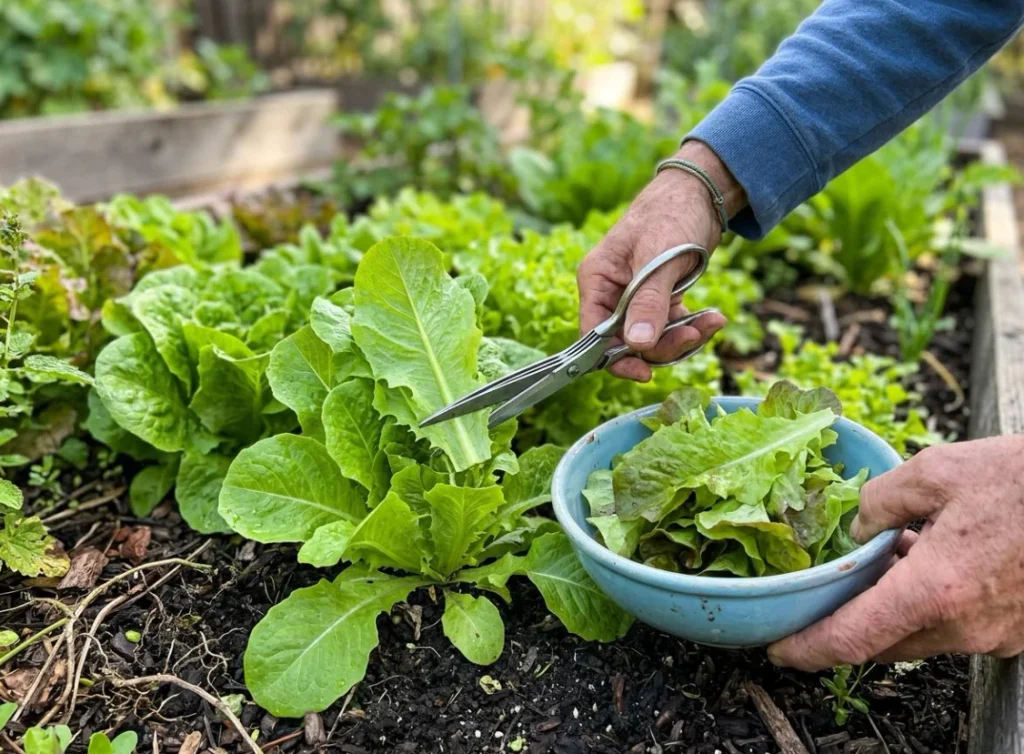
- Baby leaf: Clip 1–2 inches above the crown when leaves are 3–5 inches long. Regrowth allows multiple cuts.
- Leaf lettuce (full size): Pick outer leaves as needed or cut the whole plant at the base. For “cut-and-come-again,” leave the crown for a second flush.
- Romaine and butterhead: Harvest whole heads when firm and full, before a central stalk forms.
- Crisphead/batavia: Harvest when heads feel dense but before tipburn or bolting.
Best time of day: Early morning for maximum crispness. Rinse, spin dry, and chill promptly. Store loosely in a breathable bag or container with a paper towel in the crisper drawer.
Saving Lettuce Seed (Advanced)
Lettuce is largely self-pollinating. To save seed, allow the healthiest plants to bolt and flower, then collect fluffy mature seeds 3–4 weeks after bloom. Dry thoroughly and store cool and dry. Note: Saved seed stays truest with open-pollinated varieties; hybrids may not come true.
Smart Season Extensions
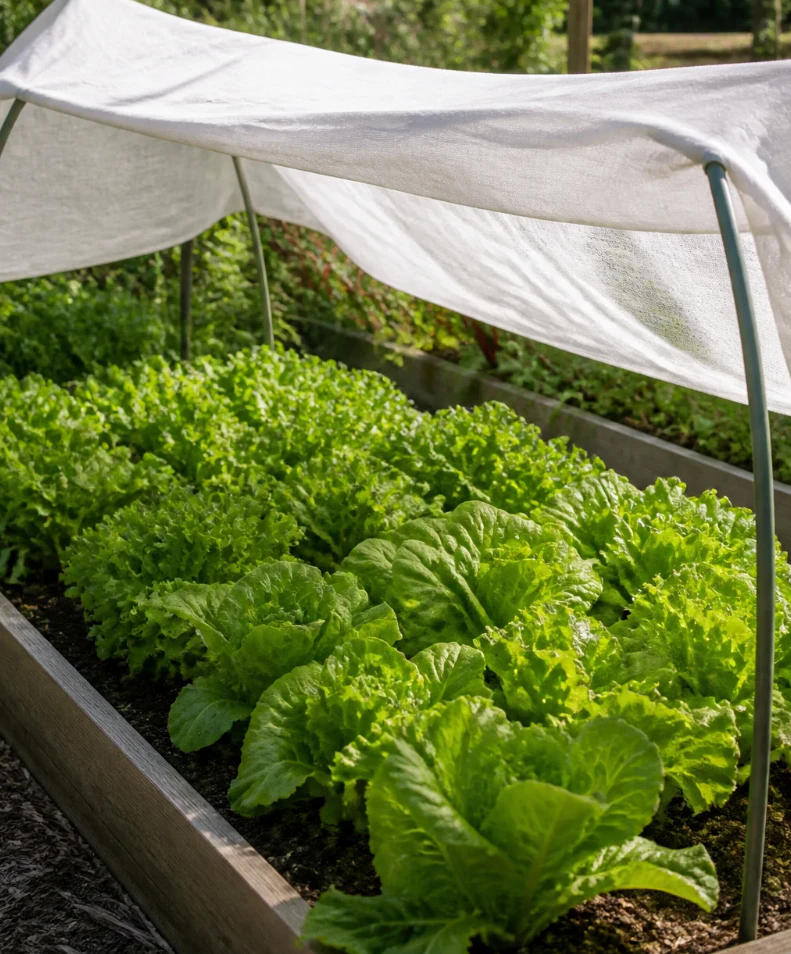
- Row covers: Lightweight fabric protects from cold and insects; remove or vent on warm days.
- Cold frames/low tunnels: Add several weeks to spring and fall windows.
- Shade cloth in summer: 30–40% shade helps prevent bolting and bitterness during late spring/early summer transitions.
Variety Recommendations to Try
- Heat-tolerant/bolt-resistant: Jericho (romaine), Nevada (batavia), Muir (leaf), Red Sails (leaf).
- Early, reliable looseleaf: Black Seeded Simpson, Salad Bowl (green or red).
- Butterhead favorites: Buttercrunch, Tom Thumb (great for containers).
- Mini romaine: Little Gem for compact, sweet crunch.
- Cutting mixes: Any mesclun/baby leaf blend labeled for spring or all-season.
Frequently Asked Questions
How long does lettuce take to grow from seed to harvest?
Baby leaves are ready in about 25–35 days. Full-size heads usually take 45–70 days depending on type and temperature. Cooler, steady conditions produce the best quality.
Why is my lettuce bitter?
Heat, water stress, and bolting are the usual culprits. Keep soil evenly moist, provide shade in warm spells, and choose bolt-resistant varieties for late spring. Harvest before a flower stalk develops.
Can I grow lettuce in summer?
Yes, but it’s trickier. Use heat-tolerant varieties, give afternoon shade, keep soil moist, and consider batavia or romaine types. In hot climates, switch to baby-leaf harvests or grow at higher elevation/shoulder seasons.
What’s the best way to wash and store lettuce?
Harvest in the morning, rinse in cool water, spin or pat dry, and refrigerate in a breathable bag or lidded container with a paper towel. Most lettuces keep 5–10 days when dry and cold.
Do I need to fertilize lettuce?
Often compost at planting is enough. If leaves pale or growth stalls, side-dress with compost or use a light, balanced organic feed. Avoid heavy nitrogen late in the growth cycle.
Conclusion: Reliable Greens, Nearly Year-Round
Lettuce rewards a little planning with fast, delicious harvests. Sow shallow, keep moisture steady, pick varieties suited to your season, and harvest early for peak flavor. With succession planting and simple season extensions, you can enjoy crisp salads through spring and fall—and even beyond in many U.S. regions.