How to Grow Eggplant in Pots: A Complete Guide to Planting, Care, and Harvesting
Growing eggplant in containers is absolutely doable and rewarding if you give this warm-season crop the heat, sun, and steady moisture it craves. In short: use a large pot (at least 5 gallons for compact types, 10–15 gallons for standard varieties), a high-quality potting mix, full sun (6–8+ hours), and consistent watering. Fertilize regularly, support the plant with a stake or cage, and harvest when fruits are glossy and spring back gently when pressed.
This guide explains exactly how to grow eggplant in pots from seed or transplants, how to choose the right container and variety, the care steps that matter most, and how to troubleshoot common problems. You’ll also find a quick-reference table to keep timing and key requirements at your fingertips.
- Quick Reference: Container Eggplant Basics
- Why Grow Eggplant in Pots?
- Best Eggplant Varieties for Containers
- Choosing the Right Container and Potting Mix
- When and How to Plant Eggplant in Pots
- Sunlight, Temperature, and Microclimate Tips
- Watering and Mulching for Containers
- Fertilizing Container Eggplant
- Pruning, Staking, and Training
- Pollination and Fruit Set
- Companion Planting and Pot Neighbors
- Common Pests and Diseases in Containers
- Harvesting Eggplant from Containers
- Season Extension: Early Starts and Late Harvests
- Step-by-Step: From Planting to First Harvest
- Container Size, Yield, and Care: At-a-Glance Guide
- Preventing Common Mistakes
- Organic and Low-Input Approaches
- Regional Tips Across the U.S.
- End-of-Season Care and Reuse
- Frequently Asked Questions
- Conclusion
Quick Reference: Container Eggplant Basics
| Growing Factor | Recommendation | Why It Matters |
|---|---|---|
| Sunlight | 6–8+ hours of direct sun daily | Maximizes flowering, fruit set, and taste. |
| Temperature | Daytime 70–85°F; nights 65–70°F (21–29°C; 18–21°C) | Eggplant is heat-loving; cool temps slow growth and fruiting. |
| Container Size | Compact: 5–7 gallons; Standard: 10–15 gallons; 12–18″ wide | More soil volume = steadier moisture, stronger roots, larger yields. |
| Soil | Well-draining soilless potting mix with compost | Prevents waterlogging and supports healthy root growth. |
| pH | 6.2–6.8 | Optimizes nutrient availability. |
| Watering | Keep evenly moist; don’t let pot dry out | Stress causes bitter fruit, blossom drop, and pest issues. |
| Fertilizer | Start with balanced; switch to bloom/fruit-focused as buds appear | Supports both foliage growth and fruiting. |
| Planting Time | After last frost; soil/warm nights consistently above 60°F | Cold stunts growth; seedlings stall below ~55°F. |
| Harvest | 65–85+ days from transplant | Pick when glossy and firm; seeds soft and pale. |
Why Grow Eggplant in Pots?
Container-grown eggplants warm up fast, avoid many soilborne problems, and can be moved to capture extra sun or shelter from storms. Pots are ideal for small spaces, patios, and balconies. With good soil and steady care, container plants can be as productive as in-ground ones and often more manageable for beginners.
- Space-saving: One healthy plant can produce a steady stream of fruits in just a few square feet.
- Heat advantage: Dark containers and sun-warmed patios help eggplants thrive in cooler regions.
- Fewer soil diseases: Fresh potting mix sidesteps common garden soil issues.
- Flexible placement: Roll or lift pots to chase sun or protect plants.
Related: How to Grow a Fall Container Garden: What to Plant in September, October & November
Best Eggplant Varieties for Containers
Any eggplant can be grown in a large enough container, but compact or early varieties tend to perform best in pots. Choose based on your climate, taste, and how you cook.
- Compact/Patio Types (Great for 5–7 gallon pots):
- Gretel: Mini white fruits; very early; excellent in containers.
- Patio Baby: Dwarf plant with many small, glossy fruits; early and prolific.
- Fairy Tale: Slender lavender-and-white striped fruits; tender and mild.
- Asian and Long Types (Prefer 10+ gallons):
- Ichiban (or similar Japanese types): Long, slender purple fruits; early and sweet.
- Ping Tung Long: Productive, heat-tolerant; thin-skinned and mild.
- Classic Globe Types (Prefer 10–15 gallons per plant):
- Black Beauty: Classic large, deep purple fruits; needs heat.
- Rosa Bianca: Italian heirloom with plump, striped fruits; rich flavor.
- Specialty/Striped or White:
- Listada de Gandia: Beautiful purple-striped globes; great flavor.
- Casper or White Star: White fruits; delicate flavor and thin skin.
Tip: If you’re new to container eggplants or have a shorter summer, start with compact, early types they set fruit faster and demand less root space.
Choosing the Right Container and Potting Mix
Container Size and Material
Container size directly affects yield. Bigger is better because more soil holds more moisture and nutrients, reducing stress during hot spells.
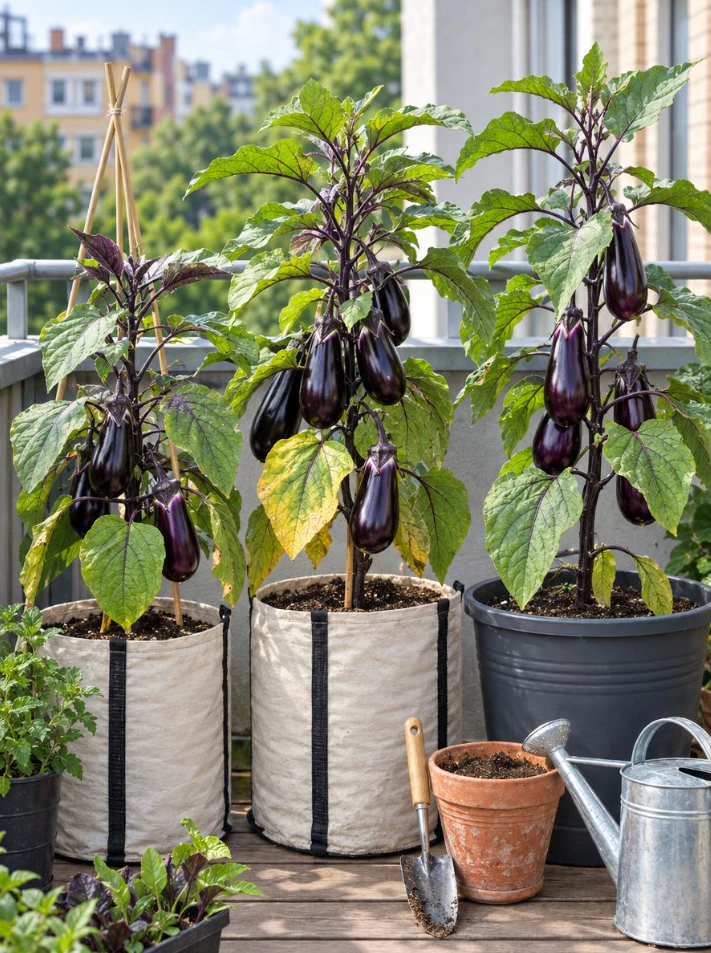
- Size: Use at least a 12-inch-wide pot for compact types (5–7 gallons); 14–18 inches wide (10–15 gallons) for standard varieties.
- Depth: 12–16 inches deep supports strong root systems.
- Drainage: Ensure multiple drainage holes. Elevate the pot slightly on pot feet or bricks to improve drainage and airflow.
- Material:
- Fabric grow bags: Great drainage and air pruning; may dry faster.
- Glazed ceramic or plastic: Retain moisture longer; avoid dark colors in very hot climates to prevent root overheating.
Related: Planting Potatoes in Buckets: From Seed Potato to Harvest
Potting Mix and Soil Amendments
Use a high-quality soilless potting mix never garden soil alone, which compacts and drains poorly in containers.
- Base: Peat- or coco-coir-based mix with perlite or pumice for drainage.
- Compost: Blend in 20–30% finished compost by volume for nutrients and water-holding capacity.
- pH target: 6.2–6.8. Most quality mixes land near this; adjust only if a soil test suggests it.
- Slow-release fertilizer: Incorporate a balanced organic or synthetic slow-release fertilizer at planting following label directions.
Container Placement
Place containers where plants receive full sun for most of the day. In extremely hot regions, light afternoon shade can reduce heat stress and sunscald without significantly reducing yield.
When and How to Plant Eggplant in Pots
Timing by Climate
- Frost-free start: Plant outside only after the last frost date when nights stay consistently above 60°F (16°C). Soil and air warmth are critical.
- Cooler climates: Start seeds indoors 8–10 weeks before your last frost date; use grow lights and warmth to reach sturdy transplant size.
- Warm climates: You can transplant earlier and sometimes grow a second fall crop if nights stay warm enough.
Starting from Seed Indoors
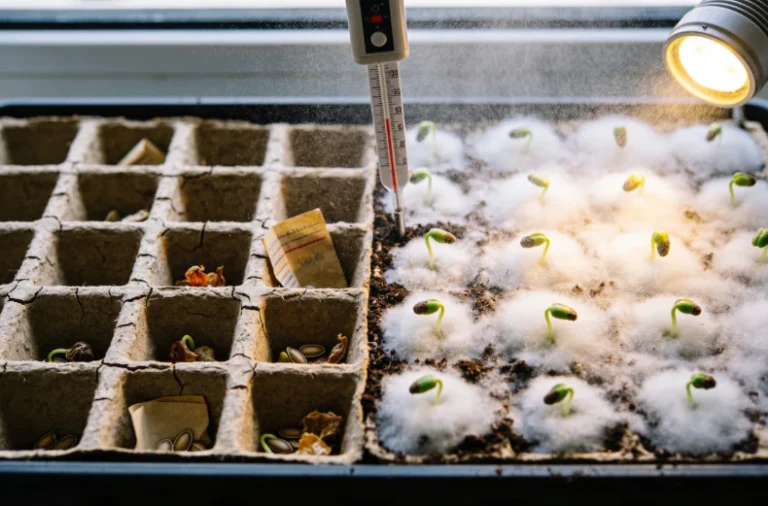
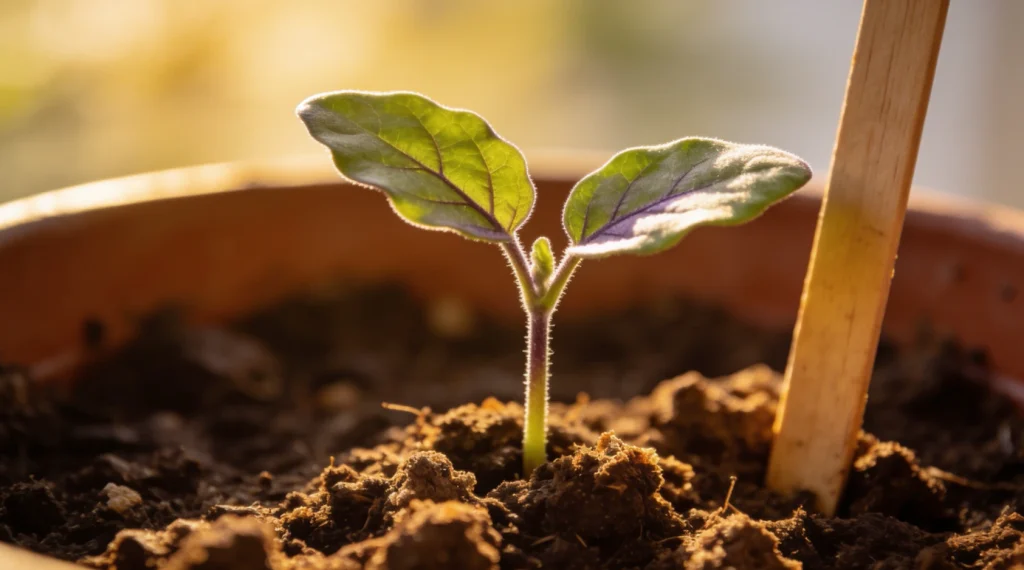
- Sow and warm: Sow seeds 1/4 inch deep in seed-starting mix. Provide bottom heat of 75–85°F (24–29°C) for faster germination (7–14 days).
- Light: After germination, give 14–16 hours of strong light daily to prevent leggy seedlings. Keep temperatures around 70–75°F.
- Pot up: Transplant to 3–4 inch pots when seedlings have 2–3 true leaves.
- Harden off: A week before moving outdoors, gradually expose seedlings to outdoor conditions (shade to sun, short to longer periods), protecting from wind and cold.
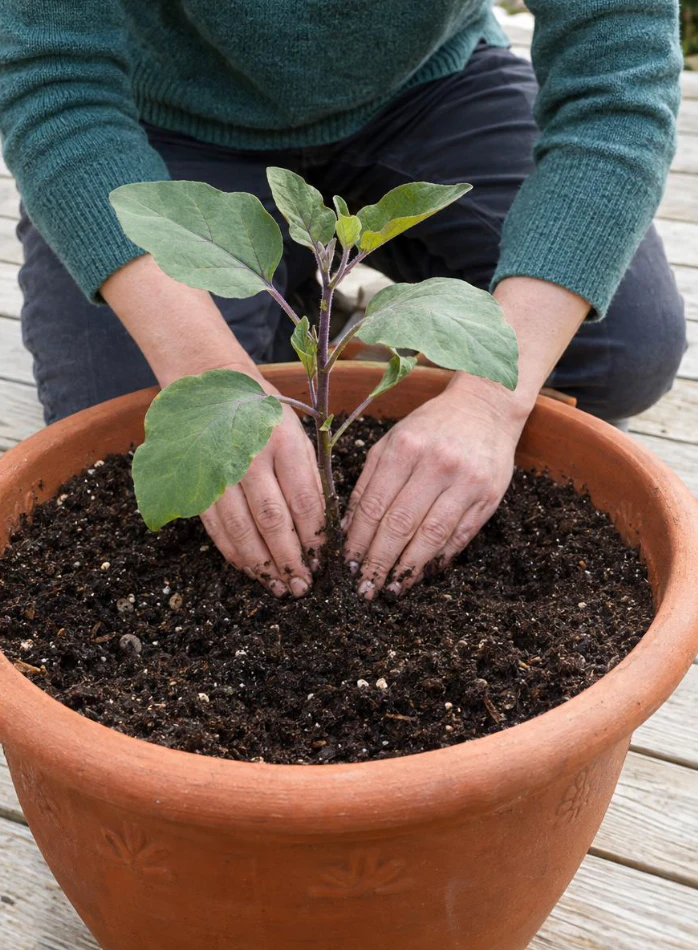
Planting Transplants in Containers
- Prep the pot: Fill the container with moistened potting mix, leaving 1–2 inches of space at the top for watering.
- Amend and fertilize: Mix in compost and a slow-release fertilizer per label. If using organic nutrients, a mix like 5-5-5 works well to start.
- Plant depth: Set the transplant at the same depth it grew in its nursery pot. Unlike tomatoes, eggplants don’t reliably root from buried stems.
- Water in: Water thoroughly to settle soil around roots and eliminate air pockets.
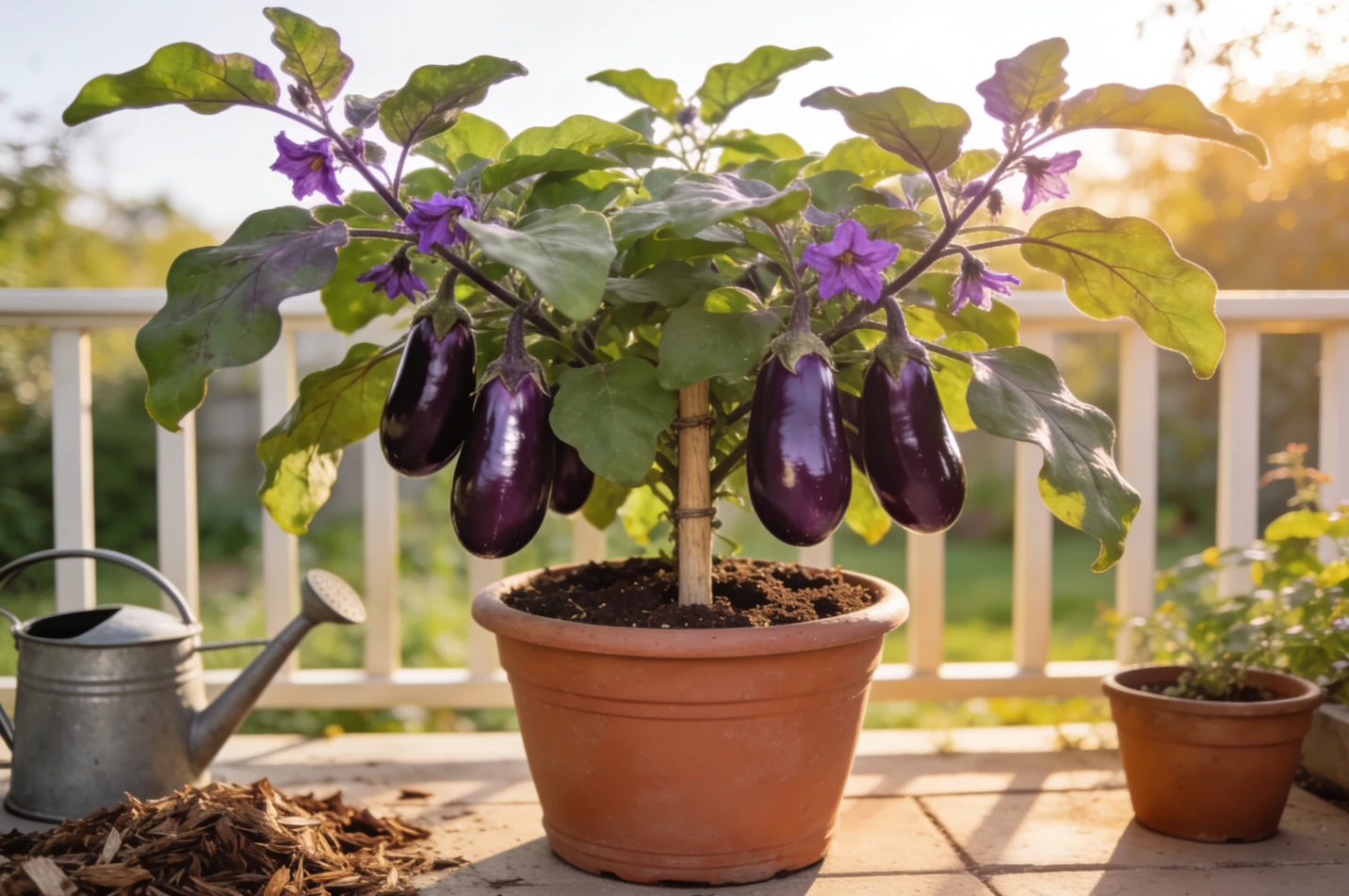
- Support: Insert a stake or small tomato cage at planting time to avoid damaging roots later.
Important: Cold shock can stunt eggplants for the whole season. If a late cold snap is forecast, move pots indoors or cover with frost cloth overnight.
Sunlight, Temperature, and Microclimate Tips
Eggplants are warmth lovers. In borderline climates, you can create a microclimate that mimics a long, warm summer.
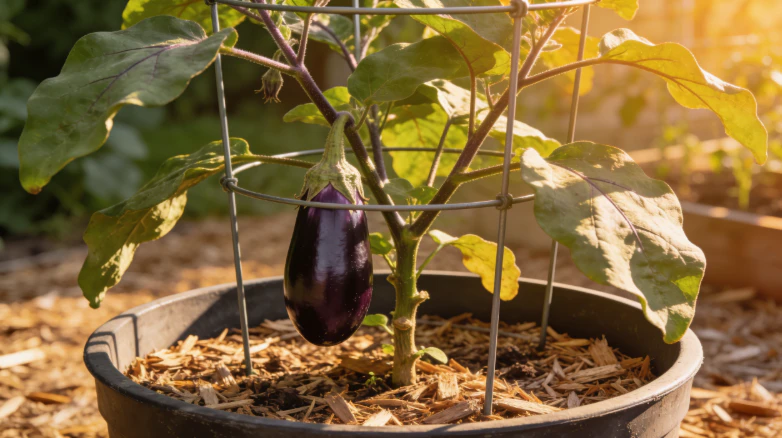
- Sun exposure: Aim for 6–8+ hours of direct sun. Morning sun with light afternoon shade works well in extreme heat.
- Heat retention: Position pots near a south-facing wall that reflects and holds heat. Use dark mulch on soil surface to warm the root zone in cooler areas.
- Air temperature: Fruit set can drop when days are below 70°F or above 95°F (21–35°C). In hot spells, a bit of afternoon shade cloth (30%) may improve fruiting.
- Wind protection: Use a windbreak on exposed balconies or rooftops. Eggplants have brittle stems; staking is crucial.
Watering and Mulching for Containers
Consistent moisture is the single biggest factor in container success. Irregular watering leads to bitter fruit, blossom drop, and small yields.
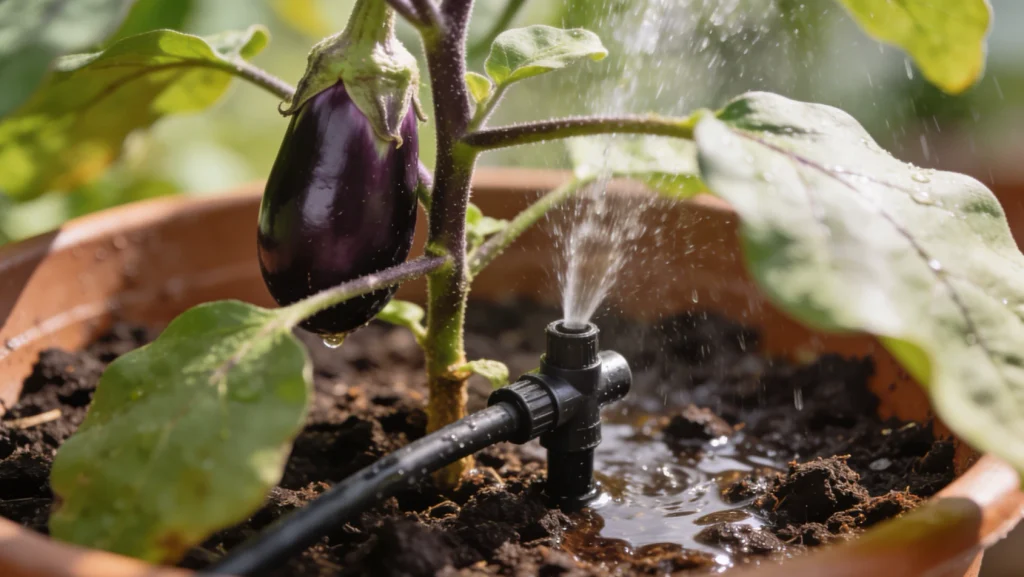
- Check first: Before watering, stick a finger 1–2 inches into the soil. If it’s dry at that depth, water thoroughly until excess drains out.
- Frequency: Expect to water every 1–2 days in midsummer, less in cooler weather. Fabric pots may need more frequent watering than plastic or glazed ceramic.
- Technique: Water at soil level to keep foliage dry, which helps prevent disease. Avoid light sprinkles; go for a deep soak.
- Mulch: Add 1–2 inches of organic mulch (shredded leaves, straw, or fine bark) to reduce evaporation and regulate soil temperature.
- Self-watering options: Reservoir planters or drip irrigation with a timer can stabilize moisture during heat waves or vacations.
Gardening tip: If leaves wilt midday but perk up by evening, that can be normal heat stress. If they’re droopy in the morning, it’s time to water or increase pot size/moisture retention.
Fertilizing Container Eggplant
Container plants rely on you for nutrients. Mix a slow-release fertilizer into the potting mix at planting, then supplement as the season progresses.
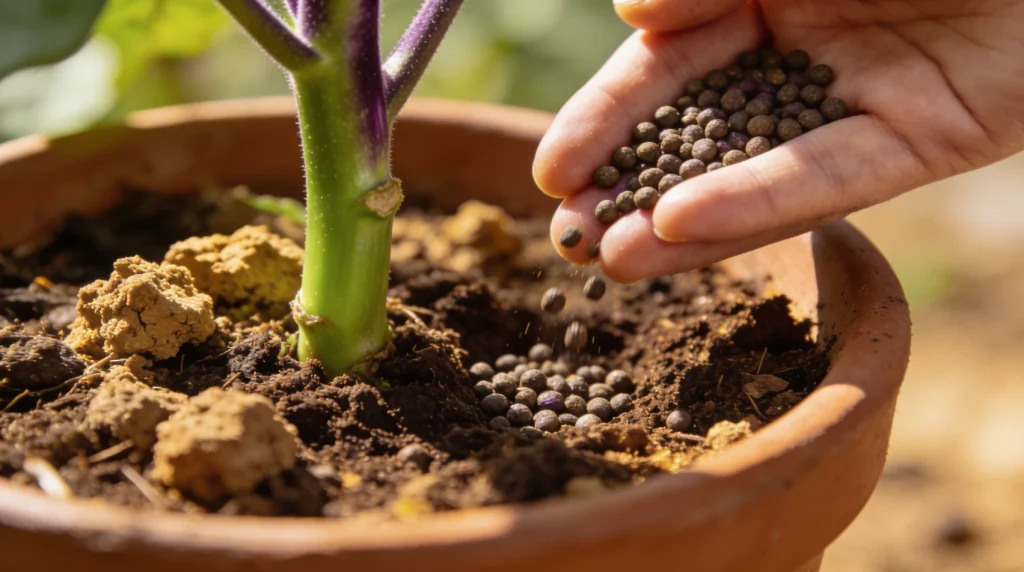
- Early growth: Use a balanced fertilizer (e.g., 5-5-5 or 10-10-10) every 3–4 weeks if not using slow-release, or a half-strength liquid feed every 1–2 weeks.
- At bud and bloom: Shift emphasis to a bloom/fruiting formula slightly higher in potassium and phosphorus. Overdoing nitrogen can fuel leafy growth at the expense of fruit.
- Micronutrients: Quality organic fertilizers typically include micronutrients. If leaves yellow between veins (interveinal chlorosis), consider an iron or magnesium supplement after ruling out overwatering.
Note: Always follow label rates; more fertilizer isn’t better. Salt buildup can burn roots in containers. If you suspect buildup (white crusts on soil), flush the pot with ample water.
Pruning, Staking, and Training
Support keeps stems from snapping and improves airflow around foliage.
- Staking: Use a sturdy stake or a small cage at planting. Tie stems loosely with soft ties as the plant grows.
- Selective pruning: Remove low leaves that touch soil, spent flowers, and damaged shoots. In very vigorous plants, thinning crowded interior shoots can improve airflow and reduce disease pressure.
- Flower management: If the first few flowers appear on a small, stressed plant, remove one or two to encourage stronger vegetative growth before fruiting.
- Fruit load: On compact container plants, limiting to 4–6 developing fruits at a time can improve size and quality.
Pollination and Fruit Set
Eggplant flowers are perfect (they contain both male and female parts) and are largely self-pollinating, but vibration or insect visits increase fruit set.
- Encourage pollinators: Plant nearby flowers and avoid broad-spectrum insecticides during bloom.
- Hand-assist: Gently tap or shake the main stem midday, or use an electric toothbrush to vibrate flowers for better pollen transfer.
- Temperature effects: Poor fruit set often results from heat spikes above 95°F or unseasonably cool weather. Patience and stable conditions usually restore flowering success.
Companion Planting and Pot Neighbors
In a single pot, eggplant generally prefers to grow alone to avoid root competition. Nearby pots can host companions that don’t share pests or stunt growth.
- Helpful neighbors: Basil, marigolds, and nasturtiums in adjacent containers may attract beneficial insects and deter some pests.
- Avoid close competition: Vigorous herbs like mint or deep-rooted veggies in the same pot can crowd eggplant roots and steal moisture.
Common Pests and Diseases in Containers
Container plants often experience fewer soilborne problems, but flying or crawling pests can still find your eggplants. Early detection is key.
Pest and Disease Troubleshooting Table
| Symptom | Possible Cause | What to Check | Recommended Action |
|---|---|---|---|
| Holes in leaves; small black droppings | Flea beetles | Tiny, hopping black beetles; shothole damage on young leaves | Use row cover early; sticky traps; spinosad or pyrethrin if severe; keep plants well-fed to outgrow damage. |
| Sticky residue; curled leaves | Aphids or whiteflies | Clusters on undersides of leaves; presence of ants | Spray with water to dislodge; insecticidal soap or neem oil; control ants which farm aphids. |
| Leaf stippling; fine webbing | Spider mites | Underside of leaves in hot, dry weather | Increase humidity; strong water spray; insecticidal soap or horticultural oil; avoid plant stress. |
| Chewed foliage; slime trails | Slugs/snails | Evening damage, damp conditions | Hand-pick at night; copper tape; iron-phosphate baits labeled for edibles. |
| Wilted plant despite moist soil | Verticillium wilt or root issues | Brown streaks in stem, one-sided wilt; or compacted/waterlogged soil | Remove and discard infected plants; use fresh potting mix; improve drainage; rotate away from other nightshades next season. |
| Brown, water-soaked spots on fruit | Sunscald or blossom-end rot | Fruit exposed to intense sun; or black/brown patch at blossom end | Provide light shade in heat waves; maintain even moisture and adequate calcium; avoid drought-stress cycles. |
| Flowers drop without fruit | Temperature extremes, drought, excess nitrogen, poor pollination | Recent heat/cold; watering pattern; fertilizer type | Stabilize moisture; reduce high-N feeds; provide shade cloth in extreme heat; gently shake plants for pollination. |
Harvesting Eggplant from Containers
Harvest timing affects flavor and texture more than size alone. Overripe eggplants turn seedy and bitter; underripe ones can be bland.
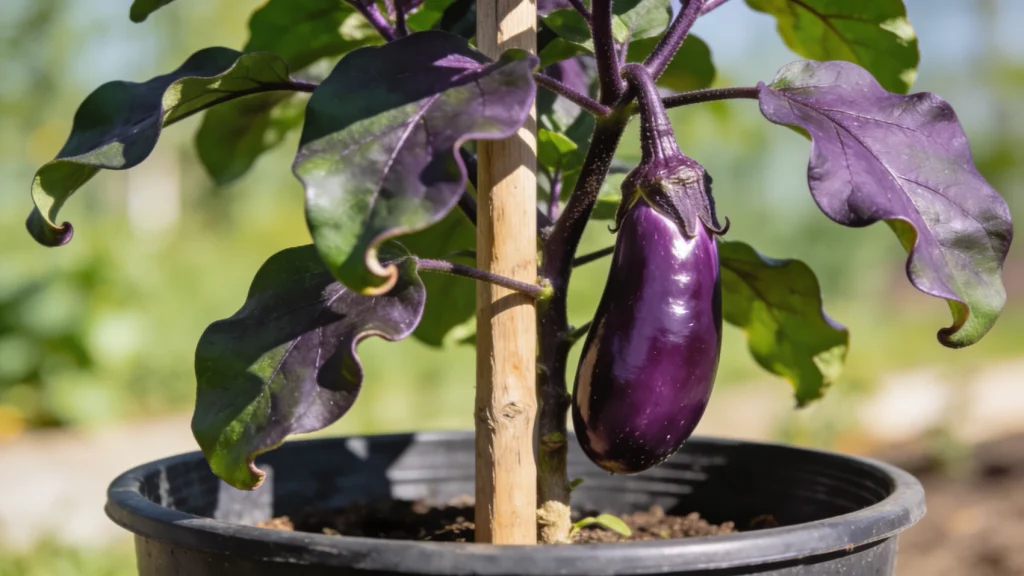
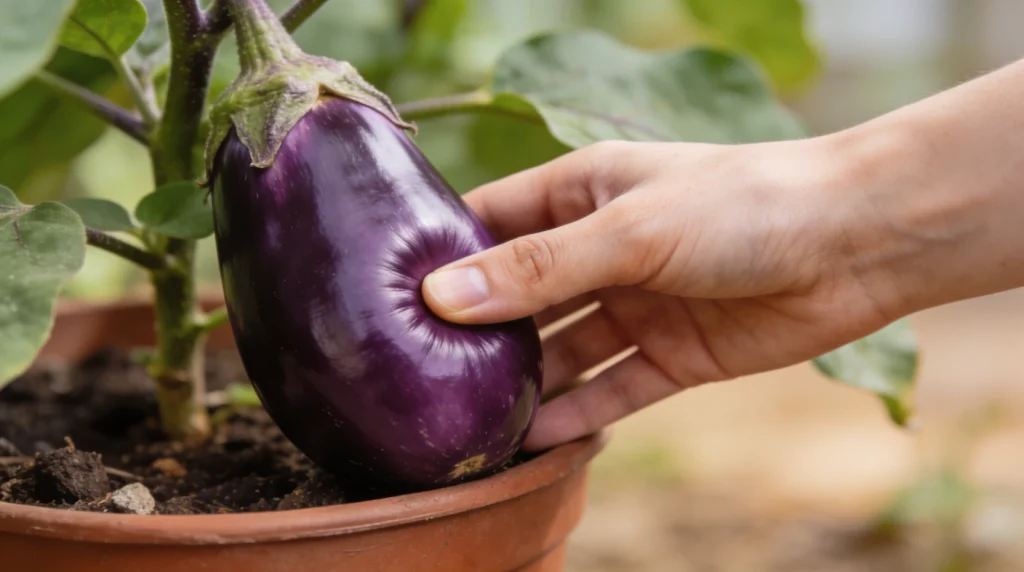
- Look and feel: Skin should be glossy and firm. Press gently if it springs back, it’s ready. If the dent remains, the fruit may be overripe.
- Color: Each variety has a mature color; focus on gloss rather than waiting for maximum size.
- Seeds and flesh: When cut, seeds should be soft and pale. Tough, dark seeds indicate overripeness.
- Cut, don’t yank: Use pruners to clip the stem with a short stub attached; eggplants have woody stems and can tear easily.
- Frequent picking: Harvesting encourages new flowers and fruits.
Season Extension: Early Starts and Late Harvests
Containers make extending the season simpler, especially in cool-summer areas.
- Warm the root zone: Use black pots, early-season row cover, or a cold frame.
- Night protection: Bring pots into a garage or cover with frost cloth if a cold night is forecast.
- Late-season fruiting: In late summer, remove small flowers that won’t mature before your first frost, directing plant energy into sizing up existing fruits.
Step-by-Step: From Planting to First Harvest
- Choose your variety: For smaller spaces or shorter seasons, pick patio types like Patio Baby or Fairy Tale; for larger fruits, choose Black Beauty or Rosa Bianca with bigger pots.
- Prepare the container: Select a 5–15 gallon pot with ample drainage. Fill with premium potting mix blended with compost and slow-release fertilizer.
- Plant and support: Transplant at the same depth as the nursery pot. Insert a stake or small cage now.
- Place for sun: Set the container where it gets at least 6–8 hours of direct sun daily.
- Water consistently: Keep soil evenly moist. Mulch to conserve water and moderate temperature.
- Feed as it grows: Use balanced fertilizer while plants size up; switch to a bloom/fruiting formula at flowering.
- Monitor pests: Check leaves every few days. Treat early with insecticidal soap or neem oil as needed.
- Encourage fruit set: Gently shake plants or use a toothbrush to vibrate flowers. Provide light afternoon shade during heat waves.
- Harvest promptly: Pick fruits when glossy and firm. Frequent harvesting promotes more blooms.
Container Size, Yield, and Care: At-a-Glance Guide
| Container Size | Suitable Varieties | Watering Frequency | Fertilizer Rhythm | Expected Yield (per healthy plant) |
|---|---|---|---|---|
| 5–7 gallons | Patio Baby, Fairy Tale, Gretel | Often daily in midsummer | Light weekly liquid or monthly balanced | 15–30+ small fruits over the season |
| 10–12 gallons | Ichiban, Ping Tung Long, compact globes | Every 1–2 days in midsummer | Biweekly liquid or slow-release at planting + midseason top-up | 10–20 medium fruits or many slender fruits |
| 14–15+ gallons | Black Beauty, Rosa Bianca, large globes | Every 1–2 days; retains moisture longer | Slow-release plus occasional liquid feed at bloom/fruit set | 6–12 large globes, depending on heat and care |
Note: Yield varies with climate, sun, fertility, and stress. Larger containers typically mean steadier production.
Preventing Common Mistakes
- Too-small pots: Restricts roots, dries out fast, and limits yield. Upsize your container if moisture is hard to maintain.
- Cold planting: Transplant shock below 55–60°F can stunt for weeks. Wait for warm nights.
- Overwatering without drainage: Waterlogged roots lead to yellowing leaves and rot. Always ensure good drainage.
- Excess nitrogen: Big leaves, few fruits. Shift to bloom/fruiting fertilizer as soon as flower buds appear.
- Ignoring support: Heavy fruits can snap stems. Stake or cage early.
- Late harvesting: Dull, seedy, bitter fruit. Pick when glossy and springy.
Organic and Low-Input Approaches
It’s straightforward to keep eggplant care organic in containers.
- Soil fertility: Compost, fish emulsion, kelp, and organic slow-release fertilizers build balanced nutrition.
- Pest control: Start with physical controls (hand removal, water sprays). Use insecticidal soap or neem oil when needed. Encourage beneficial insects by growing flowers nearby.
- Weed-free zone: Containers eliminate most weeding, reducing labor and competition.
Regional Tips Across the U.S.
- Cool-summer regions (Pacific Northwest, New England, Upper Midwest): Choose early, compact types. Use black pots and warm microclimates. Consider small season extenders early and late.
- Hot, arid regions (Southwest, parts of Texas): Use larger, lighter-colored pots to prevent root overheating. Mulch well and water deeply. Provide 30% shade cloth during extreme heat to reduce flower drop and sunscald.
- Humid Southeast: Emphasize airflow and staking. Monitor for aphids, whiteflies, and mites. Water at soil level and avoid evening foliar moisture.
- High elevations: Night temps can be cool. Use patio heat retention (near walls), start indoors early, and consider moving pots inside on cold nights.
End-of-Season Care and Reuse
- Final harvest: Before the first frost, harvest all usable fruit. Slightly underripe is better than frost-damaged.
- Plant disposal: If plants were healthy, compost them. If you had disease issues, bag and discard to reduce carryover risks.
- Soil reuse: Container soil compacts and loses structure over a season. Refresh by replacing at least half with new potting mix and compost next year. Don’t reuse mix that hosted serious disease.
- Clean containers: Wash pots with soapy water and a 10% bleach solution or white vinegar rinse to reduce pathogen carryover.
Frequently Asked Questions
How big should a pot be for eggplant?
For compact patio varieties, use at least a 5–7 gallon pot (about 12 inches wide). For standard or large-fruited eggplants, choose a 10–15 gallon container (14–18 inches wide). Bigger pots help maintain even moisture and support higher yields.
Why are my eggplant flowers falling off?
Flower drop is usually caused by stress: temperature extremes (below 65°F nights or above 95°F days), uneven watering, or excessive nitrogen. Stabilize moisture, reduce high-nitrogen feeding once buds appear, and consider light shade during heat waves. Gentle shaking of plants can improve pollination.
How often should I water eggplant in containers?
Water when the top 1–2 inches of soil are dry often daily in midsummer heat, and every 1–2 days otherwise. Always water deeply until excess drains out, and use mulch to reduce evaporation.
Can I grow two eggplants in one pot?
It’s best to plant one per container unless your pot is very large (20+ gallons). Two plants in a small pot will compete for resources, leading to smaller, stressed plants and fewer fruits.
When is an eggplant ready to pick?
Harvest when fruits are glossy and firm. Press the skin gently; if the dent springs back, it’s ready. Dull skin or hard, dark seeds indicate overripeness. Don’t wait for maximum size focus on shine and resilience.
Do eggplants need to be pruned?
They don’t require heavy pruning, but removing the lowest leaves that touch soil, damaged shoots, and crowded interior growth improves airflow and reduces disease risk. On compact plants, limiting the number of developing fruits at once can boost size and quality.
Conclusion
Success with eggplant in pots comes down to a few fundamentals: a big enough container, warmth and full sun, consistent moisture, balanced feeding that shifts to fruit support, and early staking. Choose a variety that fits your climate and pot size, start warm, and harvest when fruits are glossy and spring back to the touch. With steady care, even a single container can keep you supplied with tender, flavorful eggplant all season.