The Secret to How to Grow Basil: Planting, Care, and Harvesting Guide
Basil is one of the easiest and most rewarding herbs to grow at home perfect for fresh pesto, salads, and sauces. Here’s the short version: give basil full sun, warm temperatures, well-drained soil, and consistent moisture, and harvest often to keep plants leafy. This guide explains exactly when and how to plant, water, prune, and troubleshoot basil so you can enjoy steady harvests all season.
- Quick Start: The Basics of How to Grow Basil
- Choosing the Right Basil Variety
- When and Where to Plant Basil
- How to Plant Basil from Seeds or Starts
- Soil, Watering, and Fertilizing
- Pruning, Pinching, and Preventing Flowers
- Growing Basil in Containers
- Common Pests and Diseases (and How to Prevent Them)
- How to Harvest Basil for Peak Flavor
- Season Extension and Indoor Basil
- Troubleshooting: Yellow Leaves, Slow Growth, and Other Problems
- How Much Basil to Plant
- Companion Planting and What to Avoid
- FAQ: Growing Basil at Home
- Conclusion: Keep It Warm, Bright, and Trimmed
Quick Start: The Basics of How to Grow Basil
- Sun: 6–8+ hours of direct sun.
- Soil: Well-drained, rich in organic matter; pH about 6.0–7.0.
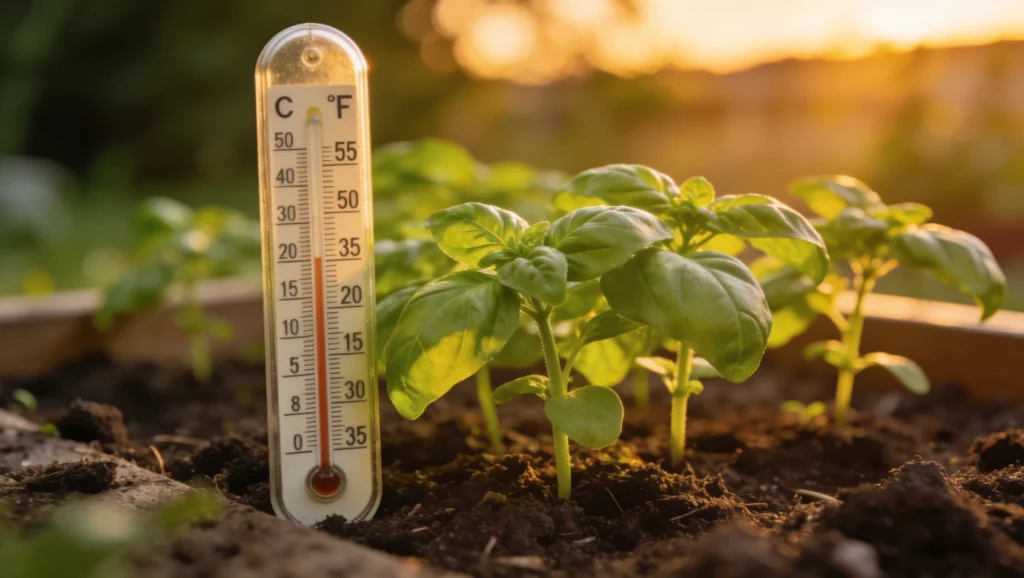
- Planting time: After frost when nights are consistently above 50°F (10°C). Start seeds indoors 4–6 weeks before your last frost if desired.
- Spacing: 8–12 inches apart for compact types; 12–18 inches for larger varieties.
- Water: Keep evenly moist but never waterlogged; water at the base.
- Fertilizer: Light, balanced feeding or compost; avoid overfertilizing.
- Harvesting: Start when plants are 6–8 inches tall; pinch above a leaf pair to encourage branching. Don’t let plants flower if you want the best flavor.
Choosing the Right Basil Variety
All basil likes warmth, but flavors, sizes, and growth habits vary. Choose based on your kitchen uses and garden space.
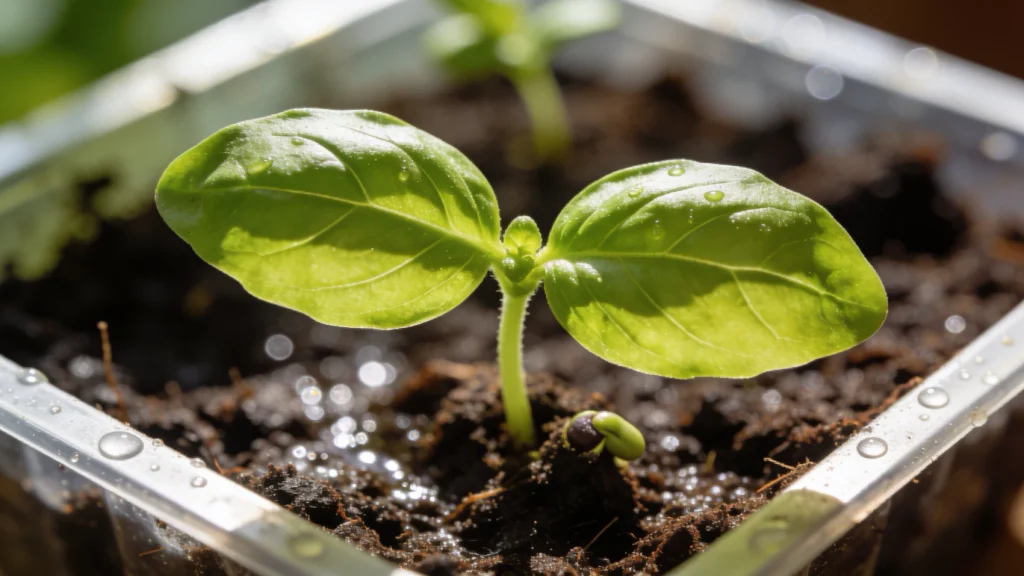
- Sweet or Genovese basil (Ocimum basilicum): Classic for pesto and caprese; large, tender leaves.
- Thai basil: Spicy, anise notes; great in Southeast Asian cooking; smaller, sturdier leaves; tolerates heat well.
- Lemon or lime basil: Citrus-scented; bright flavor for fish, salads, and teas.
- Purple basil (e.g., ‘Dark Opal’, ‘Red Rubin’): Ornamental and flavorful; slightly spicier; beautiful in salads and vinegars.
- Greek or globe basil: Compact mounding plants; excellent in containers and as edging.
- Downy mildew–resistant types: Look for newer cultivars bred for resistance if your area has recurring disease issues.
When and Where to Plant Basil
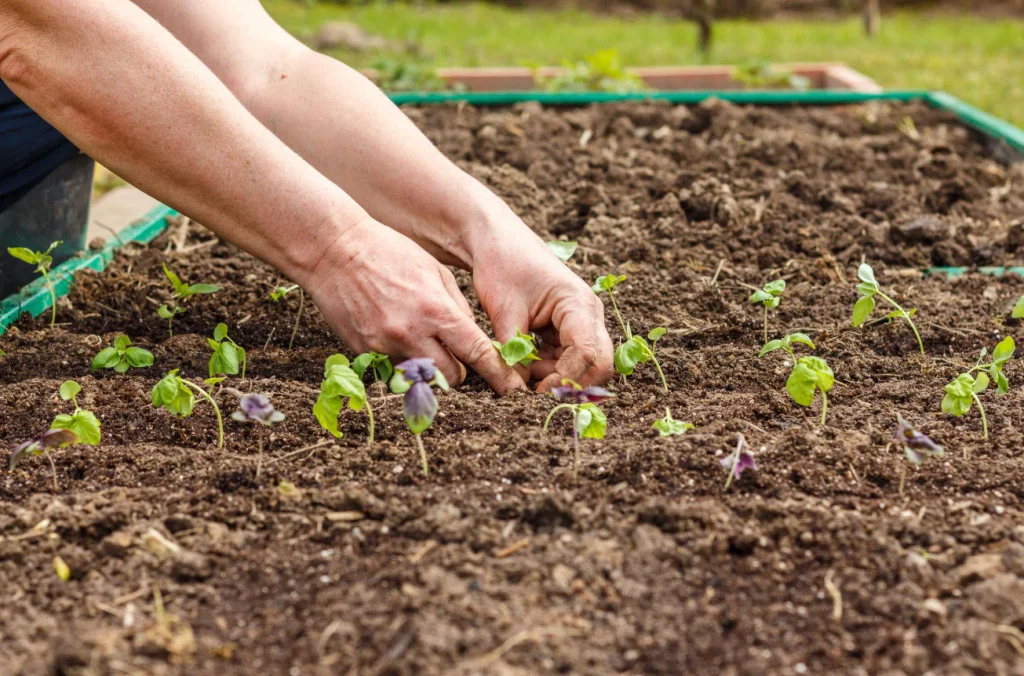
Timing by climate
- Frost-free date: Plant outdoors only after your last spring frost and once nights stay above about 50°F. Basil is very frost-sensitive.
- Seeds indoors: Sow 4–6 weeks before your last expected frost; transplant when seedlings have 2–3 sets of true leaves and weather is warm.
- Warm-season annual: In the U.S., basil is typically grown as an annual; it thrives in summer and declines with cold.
Related: Grow Herbs Without Soil! A Super Simple Hydroponic Mason Jar Herb Garden DIY
Site selection
- Sunlight: Pick a spot with at least 6–8 hours of direct sunlight daily. In very hot climates, light afternoon shade can prevent leaf scorch.
- Soil: Loose, well-drained soil enriched with compost. Heavy, soggy soil invites root issues.
- Containers: Use a pot at least 10–12 inches wide with drainage holes. A quality potting mix (not garden soil) helps prevent compaction.
How to Plant Basil from Seeds or Starts
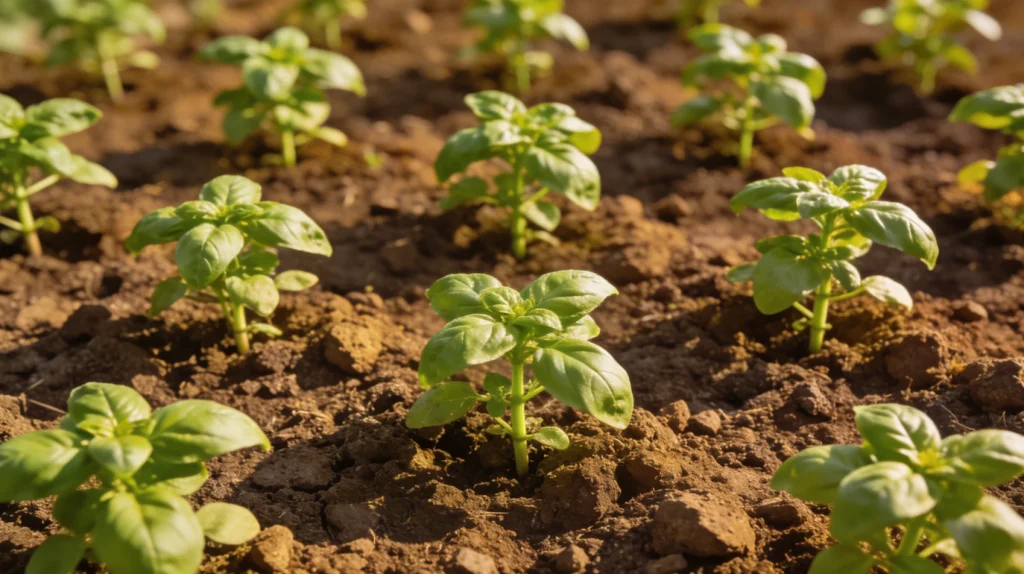
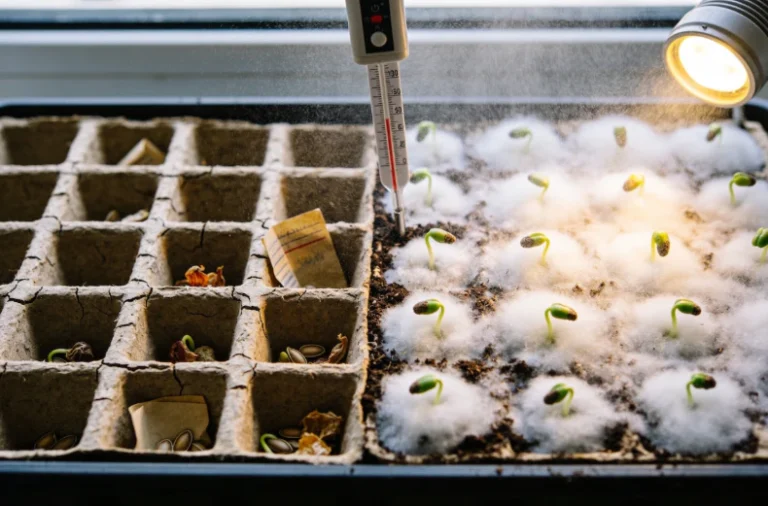
Starting basil from seed indoors
- Fill clean seed trays or small pots with a sterile seed-starting mix.
- Sow seeds about 1/4 inch deep; basil needs darkness to germinate well. Lightly firm and water gently.
- Keep at 70–75°F. Seeds usually germinate in 5–10 days.
- Provide bright light (a sunny window or grow lights 2–3 inches above seedlings, 14–16 hours/day).
- Thin to one strong seedling per cell/pot. Keep the medium evenly moist, not soggy.
- Harden off for 5–7 days before transplanting: gradually expose seedlings to outdoor conditions.
Transplanting outdoors
- Work 1–2 inches of finished compost into the top 6–8 inches of soil.
- Space plants 8–12 inches apart for compact types; 12–18 inches for larger varieties. Rows about 18–24 inches apart if planting many.
- Plant at the same depth as in the pot. Water in gently to settle roots.
- Mulch lightly (straw, shredded leaves) once soil has warmed to conserve moisture and reduce soil splash.
Direct sowing outdoors
After soil is warm (ideally above 60–65°F), sow seeds 1/4 inch deep, thin to final spacing, and keep surface evenly moist until established.
Soil, Watering, and Fertilizing
Soil and pH
- Texture: Well-drained loam or potting mix. Add compost for fertility and structure.
- pH: Slightly acidic to neutral (about 6.0–7.0). Most average garden soils are fine if drainage is good.
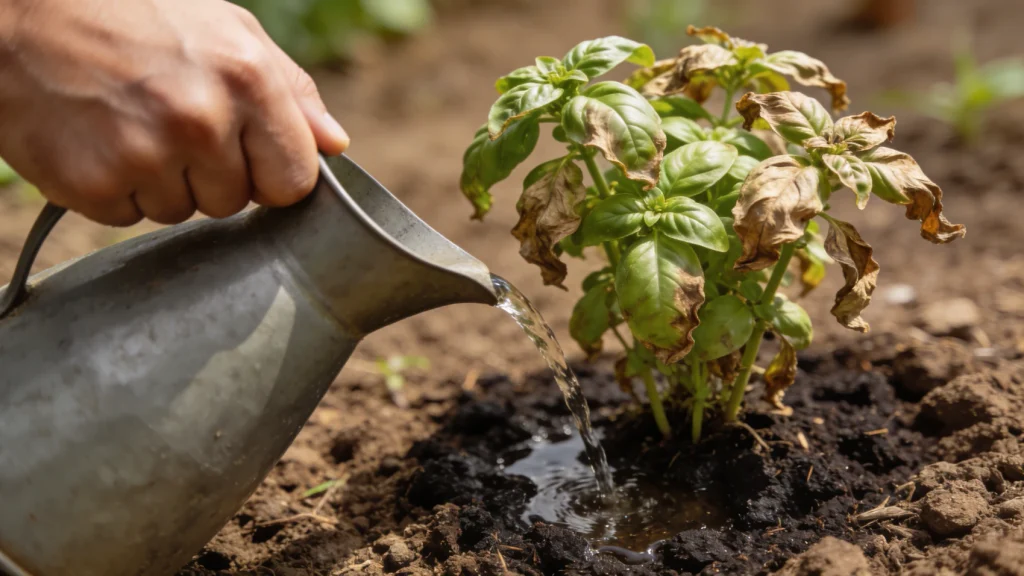
Watering correctly
- Consistency: Keep soil evenly moist. Allow the top inch to dry slightly between waterings, then water deeply.
- Method: Water at the base to keep leaves dry and reduce disease risk. Morning watering is ideal.
- Containers: Pots dry faster check daily in hot weather. Ensure excess water drains freely.
Fertilizer and growth
- Light feeders: Basil grows well with modest fertility. Mix compost into beds before planting.
- Supplemental feeding: Use a balanced, dilute liquid fertilizer (e.g., fish/seaweed or a complete organic fertilizer) every 3–4 weeks if growth slows, especially in containers.
- Avoid excess nitrogen: It can make leaves large but less flavorful and may reduce aroma.
Pruning, Pinching, and Preventing Flowers
Regular harvesting is the secret to bushy, productive basil. Left alone, basil quickly forms a central stem and flowers, which shifts energy away from leaf production.
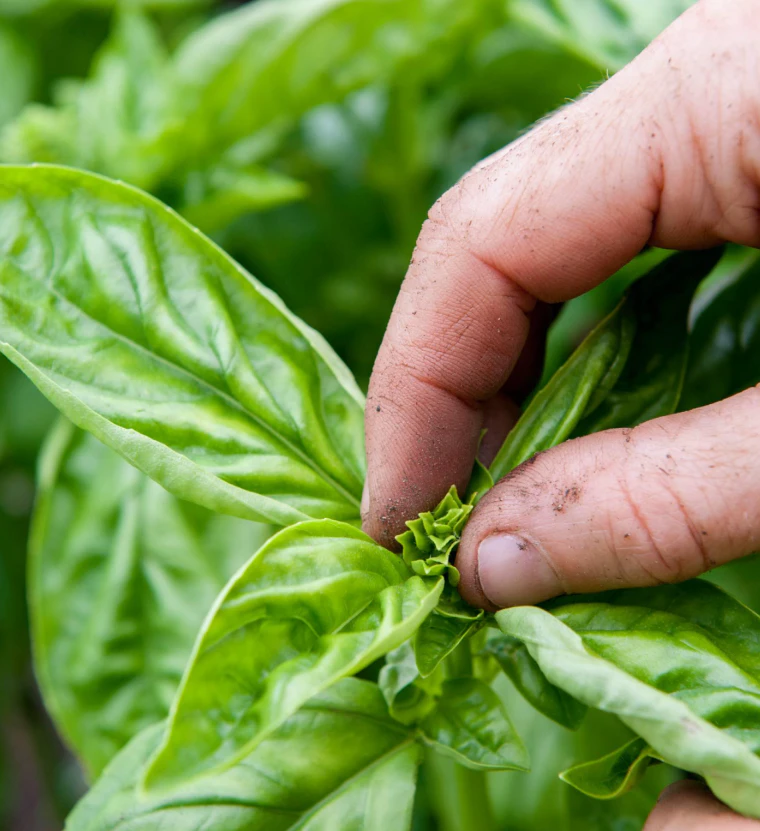
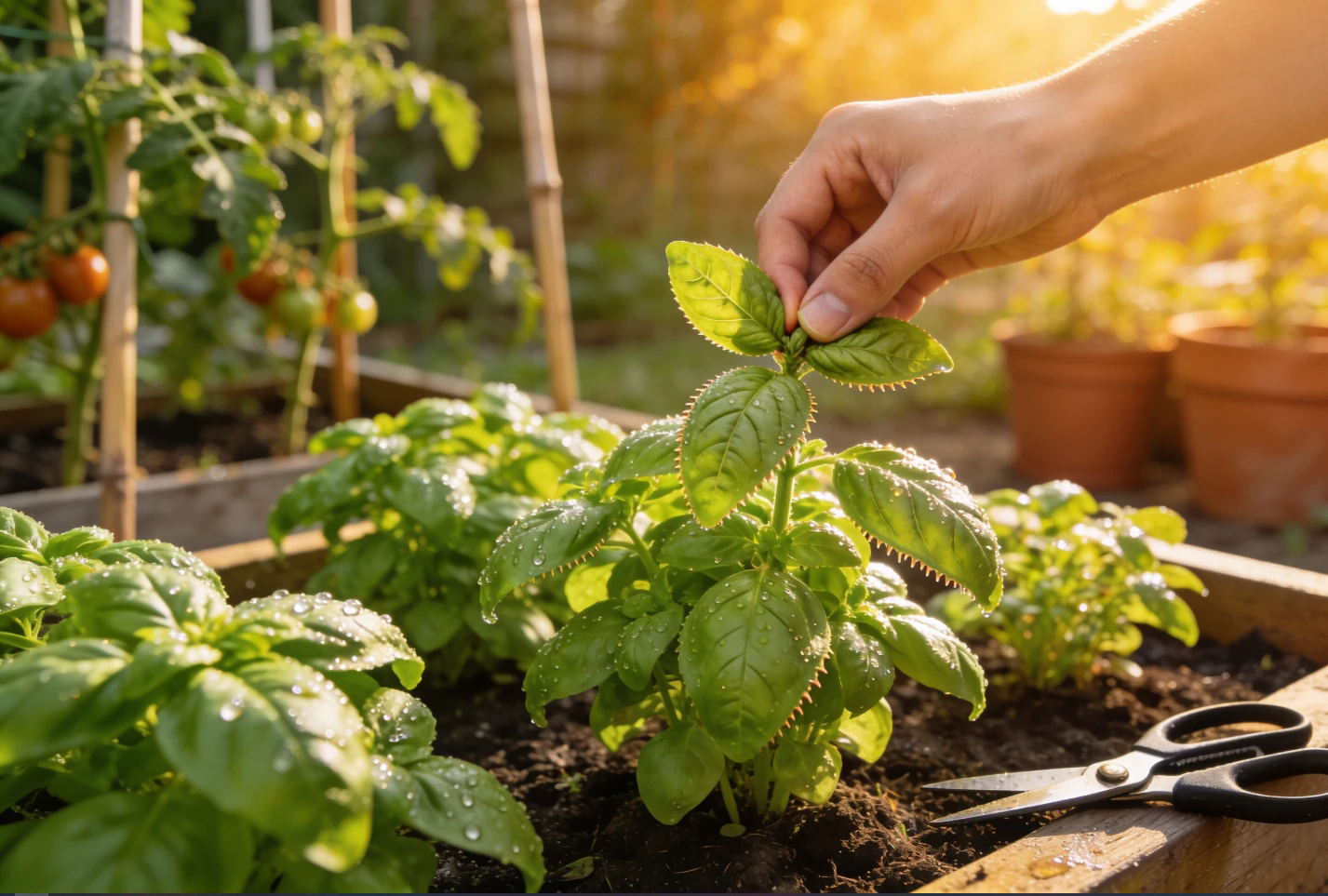
- Begin early: When plants reach 6,8 inches tall, pinch off the growing tip just above a leaf pair. This triggers side branching.
- Keep it leafy: Remove any flower buds as soon as you see them to maintain flavor and extend the season.
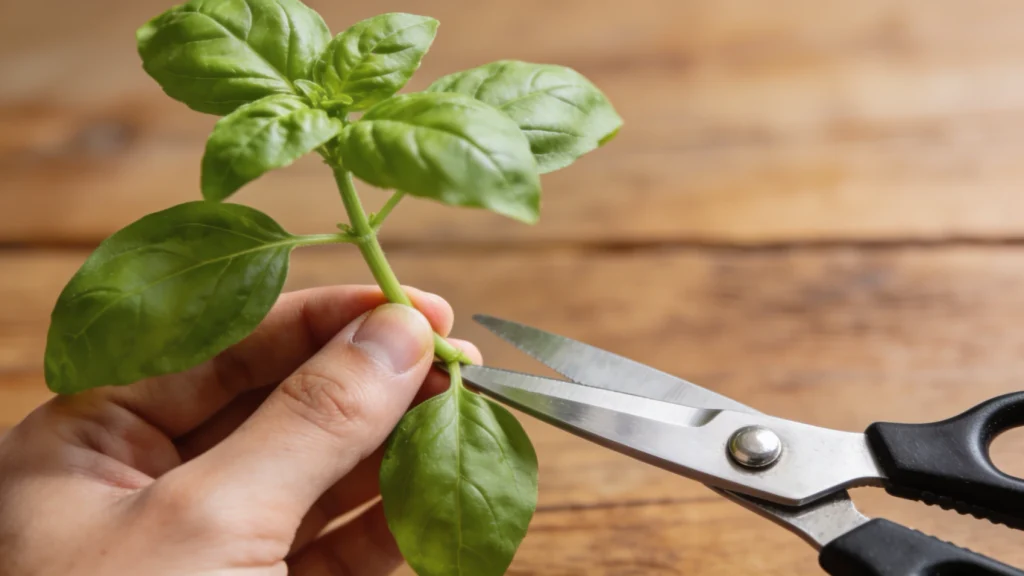
- How to cut: Harvest stems, not single leaves. Cut just above a node with two leaves so the plant splits and doubles its branches.
- Maximum cut: Never remove more than one-third of the plant at once; give it a week to rebound.
Growing Basil in Containers
- Pot size: 10–12 inches wide for one plant; larger troughs can house multiple compact plants spaced 8–10 inches apart.
- Mix: Use a high-quality, peat- or coir-based potting mix with perlite for drainage.
- Fertilizer: Nutrients leach faster in pots feed lightly every 3–4 weeks.
- Watering: Check frequently; containers may need water once daily in hot, dry weather.
- Mobility: In heat waves, move containers to spots with light afternoon shade to prevent stress.
Related: How to Grow a Fall Container Garden: What to Plant in September, October & November
Common Pests and Diseases (and How to Prevent Them)
Pests
- Aphids: Clusters on tender tips; leaves may curl. Rinse off with a strong water spray; encourage beneficial insects; use insecticidal soap if needed.
- Japanese beetles and other chewers: Handpick in early morning. Floating row covers can protect young plants.
- Slugs/snails: Ragged holes, slime trails. Use traps, handpick, or iron phosphate baits per label.
Diseases
- Basil downy mildew: Yellowing between veins on upper leaf surfaces; gray-purple fuzz underneath, often in humid weather. Improve air flow, water at soil level, avoid overhead watering late in the day, and remove infected plants. Consider resistant varieties in problem areas.
- Fusarium wilt (on susceptible cultivars): Sudden wilting, stunted growth, brown streaks in stems. Remove and discard affected plants; rotate planting spots.
- Leaf spots (bacterial or fungal): Spots on leaves; avoid splashing water, space plants well, and remove affected foliage.
Prevention tips: Provide good spacing, prune for airflow, mulch to reduce soil splash, and keep leaves dry. Always discard (don’t compost) severely diseased material.
How to Harvest Basil for Peak Flavor
- Timing: Harvest in the morning after dew dries for best flavor and turgor.
- Technique: Use clean scissors or pinch stems just above a pair of leaves. Aim to take 4–6 inch stem tips rather than single leaves.
- Frequency: Light, regular harvests every 5–7 days keep plants compact and productive.
- Before first frost: Do a final big harvest basil blackens quickly in cold.
Storing your harvest
- Short-term: Treat stems like cut flowers place in a glass of water at room temperature, loosely cover with a bag, and keep out of direct sun. Don’t refrigerate fresh leaves if possible (they blacken with cold).
- Refrigerator option: If needed, wrap leaves in a barely damp paper towel, place in a breathable bag, and use within a few days.
- Freezing: Best for long-term storage. Blend leaves with olive oil and freeze in ice-cube trays; transfer to a freezer bag.
- Drying: Possible, but flavor is milder. Dry quickly at low temperature or use a dehydrator; store in airtight jars away from light.
Season Extension and Indoor Basil
- Row covers and cloches: Offer a little nighttime warmth in spring and fall but won’t protect from hard frost.
- Indoor growing: Basil needs strong light place in the sunniest south-facing window or use LED grow lights 12–14 hours/day.
- Pot choice: 6–8 inch pot for dwarf types indoors; keep evenly moist and feed lightly monthly.
Troubleshooting: Yellow Leaves, Slow Growth, and Other Problems
- Yellowing leaves: Often from overwatering or poor drainage; could also be lack of nitrogen. Check soil moisture first, then consider a light feeding.
- Leggy plants: Not enough light or infrequent pinching. Move to a sunnier spot and prune above leaf pairs.
- Leaves taste bitter: Plants may be flowering or stressed by heat/drought. Remove blooms and keep soil evenly moist; harvest more often.
- Blackened leaves after a cool night: Cold injury. Protect plants when temps dip below mid-50s°F or harvest ahead of a cold snap.
How Much Basil to Plant
- Casual use: 1–2 plants supply regular garnishes and occasional pesto.
- Frequent cooking: 3–5 plants per household member for salads, sauces, and weekly pesto.
- Preserving: For big batches of pesto to freeze, plan 6–10 plants and successive plantings.
Companion Planting and What to Avoid
- Good companions: Tomatoes, peppers, eggplant similar sun and water needs; basil can help fill space and attract pollinators.
- Avoid crowding: Don’t tuck basil too close under dense plants—reduced airflow and shade increase disease risk.
- Crop rotation: Move basil yearly if you’ve had soil-borne diseases like fusarium.
FAQ: Growing Basil at Home
How many hours of sun does basil need?
Give basil at least 6–8 hours of direct sun daily. In extremely hot regions, light afternoon shade prevents leaf scorch without sacrificing yield.
Why is my basil flowering, and should I let it?
Basil flowers naturally as it matures, especially in heat. If you want maximum leaf production and the best flavor, pinch off flower buds. If you’re after seeds or pollinator support, allow some stems to bloom near the end of the season.
Can I grow basil indoors year-round?
Yes, with strong light. A south-facing window may work in summer, but in winter you’ll usually need LED grow lights 12–14 hours a day. Keep temperatures above 60°F and avoid drafty sills.
What’s the best way to harvest basil for bushier plants?
Cut 4–6 inch tips just above a pair of leaves. This forces two new branches to grow from that node, making the plant fuller over time.
Why are my basil leaves turning black in the fridge?
Basil is cold-sensitive and can blacken below about 50°F. Store stems at room temperature in a glass of water for a day or two, or freeze blended basil with oil for longer storage.
How do I prevent basil downy mildew?
Choose resistant varieties when available, space plants for airflow, water at the base in the morning, avoid overhead watering late in the day, and remove infected plants promptly to limit spread.
Conclusion: Keep It Warm, Bright, and Trimmed
Growing basil comes down to a few essentials: warm weather, plenty of sun, well-drained soil, steady moisture, and frequent harvesting. Start small, pinch often, and you’ll have fragrant leaves ready for everything from quick weeknight pasta to jars of pesto for the freezer.