
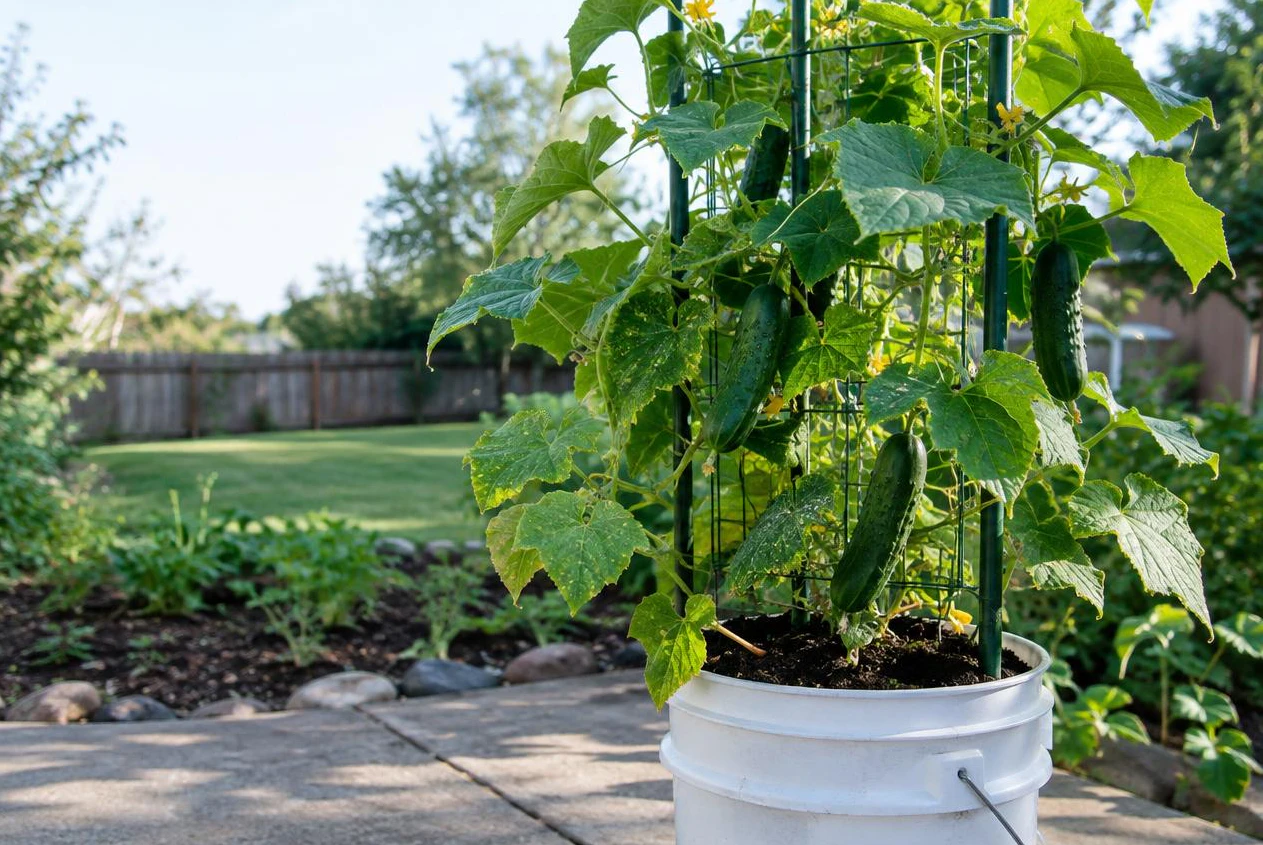
How to Grow Cucumbers in a 5-Gallon Bucket: Step-by-Step Guide
Cucumbers are usually associated with sprawling garden vines, but you don’t need a large garden to grow them. With the right variety, a 5-gallon bucket can provide enough space for a healthy cucumber plant while keeping the growing setup manageable on a patio, balcony, or other small space.
This guide explains how to choose a suitable cucumber variety, prepare a 5-gallon bucket, plant and care for your cucumber, provide support, manage pollination, and troubleshoot common problems such as yellow leaves, poor fruit set, and bitter or misshapen fruit.
- Can You Grow Cucumbers in a 5-Gallon Bucket?
- How Many Cucumber Plants Can You Grow in a 5-Gallon Bucket?
- When to Plant Cucumbers in a Bucket
- Choose the Right Cucumber Variety
- What You Need to Grow Cucumbers in a 5-Gallon Bucket
- How to Prepare a 5-Gallon Bucket
- How to Plant Cucumbers in a 5-Gallon Bucket
- How to Care for Cucumbers in a 5-Gallon Bucket
- Do Cucumbers Need a Trellis in a 5-Gallon Bucket?
- Do Cucumbers Need Pollination?
- When to Harvest Cucumbers
- Common Problems With Bucket-Grown Cucumbers
- Common Mistakes to Avoid
- Frequently Asked Questions
- Can You Grow Cucumbers in a 5-Gallon Bucket?
- How Many Cucumber Plants Can You Grow in a 5-Gallon Bucket?
- When to Plant Cucumbers in a Bucket
- Choose the Right Cucumber Variety
- What You Need to Grow Cucumbers in a 5-Gallon Bucket
- How to Prepare a 5-Gallon Bucket
- How to Plant Cucumbers in a 5-Gallon Bucket
- How to Care for Cucumbers in a 5-Gallon Bucket
- Do Cucumbers Need a Trellis in a 5-Gallon Bucket?
- Do Cucumbers Need Pollination?
- When to Harvest Cucumbers
- Common Problems With Bucket-Grown Cucumbers
- Common Mistakes to Avoid
- Frequently Asked Questions
Can You Grow Cucumbers in a 5-Gallon Bucket?
Yes. A 5-gallon container is large enough to grow a cucumber plant when it has good drainage, suitable potting mix, adequate sunlight, consistent moisture, and enough support for the plant’s growth.
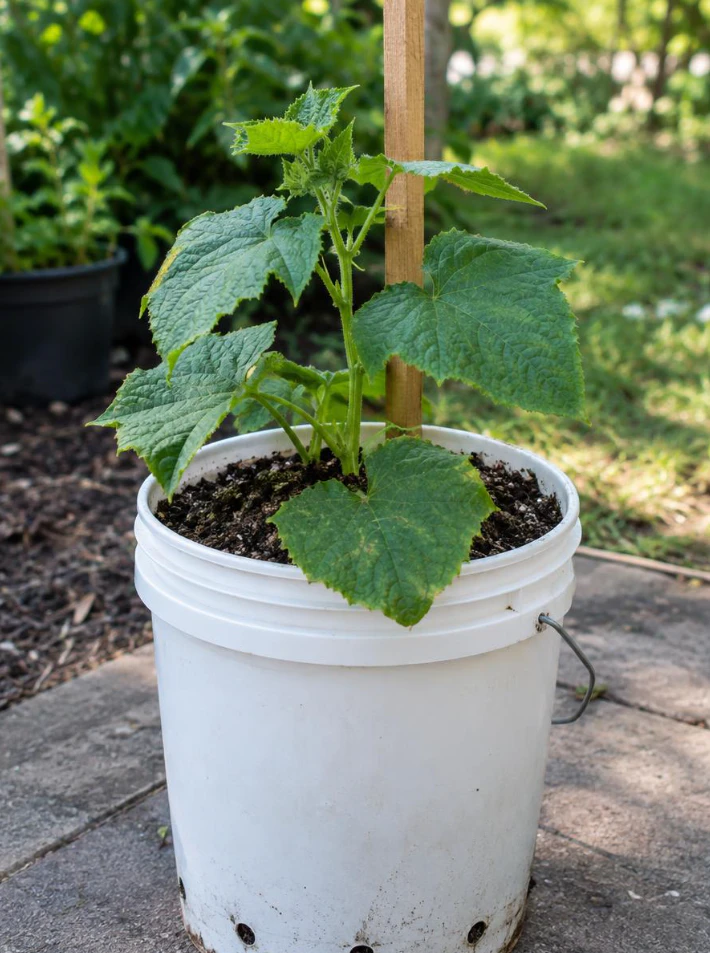
University of Maryland Extension lists 5 gallons as the minimum container volume for cucumbers and recommends choosing bush, dwarf, or compact varieties when growing vegetables in containers.
For most beginners, one cucumber plant per 5-gallon bucket is the simplest setup. If you want to grow more plants, using additional buckets is usually easier than overcrowding one container.
Cucumbers also have relatively shallow, spreading roots, so the container’s width and volume matter. The bigger challenge in a bucket is often maintaining consistent moisture because containers can dry out much faster than garden soil.
How Many Cucumber Plants Can You Grow in a 5-Gallon Bucket?
For most gardeners, one cucumber plant per 5-gallon bucket is the simplest and most reliable setup, especially when growing a vigorous vining variety.
Two plants may grow in the same bucket, but they will compete for water, nutrients, and root space. A crowded container can also dry out more quickly and become harder to manage.
If you want more cucumbers, use more buckets rather than packing several plants into one.
If you sow several seeds in the same bucket, thin the seedlings after they emerge and keep the strongest plant.
COMMON MISTAKE: Don’t pull unwanted seedlings out roughly by hand. Cutting the extra seedlings at soil level with clean scissors reduces disturbance to the roots of the plant you’re keeping.
When to Plant Cucumbers in a Bucket
Cucumbers are warm-season plants and are sensitive to frost. Seeds germinate best when the soil is warm, with temperatures around 70°F (21°C) encouraging faster germination. Avoid planting into cold, wet soil because germination can be slow and uneven.
A practical approach is to wait until the danger of frost has passed and the soil has warmed before planting outdoors.
Your local climate matters more than a fixed calendar date. In cooler regions, this may mean waiting until late spring. In warmer climates, planting can begin earlier, while extremely hot conditions can make flowering and fruit set more difficult.
General Planting Guide
| Climate | General Timing | What to Consider |
| Cool climates | After the last frost | Wait for warm soil and stable weather |
| Moderate climates | Late spring | Direct sowing can work once the soil is warm |
| Warm climates | Spring or another suitable growing window | Avoid periods of extreme heat |
| Hot climates | Cooler growing periods | Protect plants from excessive heat and maintain consistent moisture |
Most cucumber varieties have a maturity period listed on the seed packet. Use that information together with your local growing season rather than relying on a single planting date.
Choose the Right Cucumber Variety
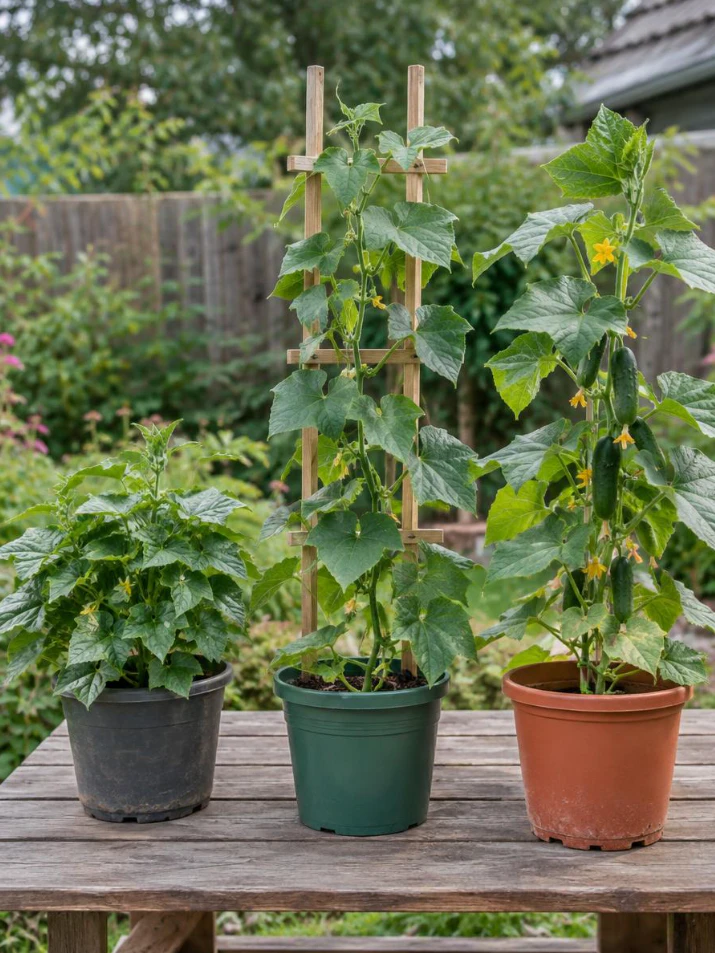
Variety choice matters when growing cucumbers in a bucket. Compact and bush varieties are generally easier to manage in containers, while vining varieties can also work well if you provide a sturdy trellis.
Bush and Compact Varieties
Bush and compact cucumbers produce shorter growth than many traditional vining types, making them convenient for containers and small gardens.
When choosing seeds, look for descriptions such as:
- Bush
- Compact
- Patio
- Dwarf
- Container
Examples commonly marketed for compact growing include Spacemaster and Bush Champion. Always check the current seed packet because plant size and growing characteristics can vary by cultivar.
Vining Varieties
Vining cucumbers can also perform very well in a bucket when grown vertically.
They need more support and usually require closer attention to watering because a large plant can use water quickly. The advantage is that the vines can grow upward instead of spreading across the ground.
For a balcony or patio, a compact vining variety combined with a trellis can make excellent use of vertical space.
Related: A Beginner’s Guide to Using Trellises in Your Vegetable Garden
What About Parthenocarpic Cucumbers?
Parthenocarpic cucumber varieties can produce fruit without pollination. They can be particularly useful in enclosed spaces, greenhouses, or balconies where pollinating insects are limited.
However, check the seed packet carefully because not every cucumber marketed for containers is parthenocarpic.
What You Need to Grow Cucumbers in a 5-Gallon Bucket
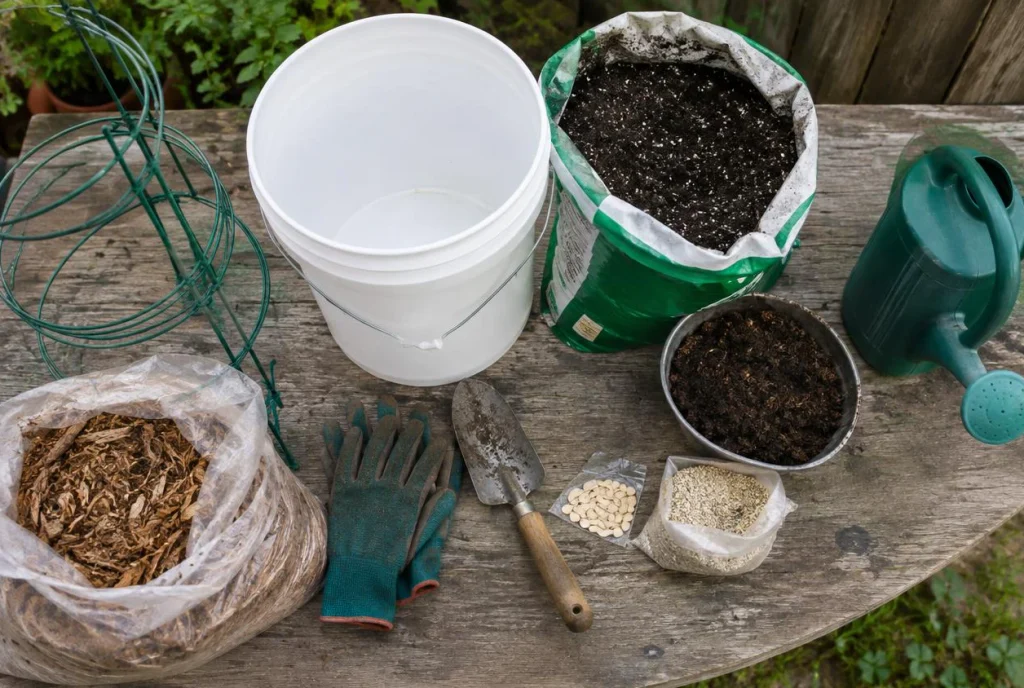
You’ll need:
- A food-safe 5-gallon bucket
- A drill for creating drainage holes
- Quality container potting mix
- Cucumber seeds or one healthy transplant
- Fertilizer suitable for container vegetables
- A tomato cage, stakes, trellis, or other support
- Mulch such as straw or shredded leaves
- A watering can or hose
Use a food-safe bucket that has not previously held paint, solvents, pesticides, or other chemicals. University of Maryland Extension specifically recommends food-grade buckets for growing vegetables.
Why You Shouldn’t Use Garden Soil
Avoid filling the bucket with ordinary garden soil by itself. Garden soil can become compacted in containers and may not provide the drainage and aeration that container-grown roots need.
Use a quality potting mix designed for containers instead.
How to Prepare a 5-Gallon Bucket
Step 1: Add Drainage Holes
Drill several drainage holes in the bottom of the bucket so excess water can escape.
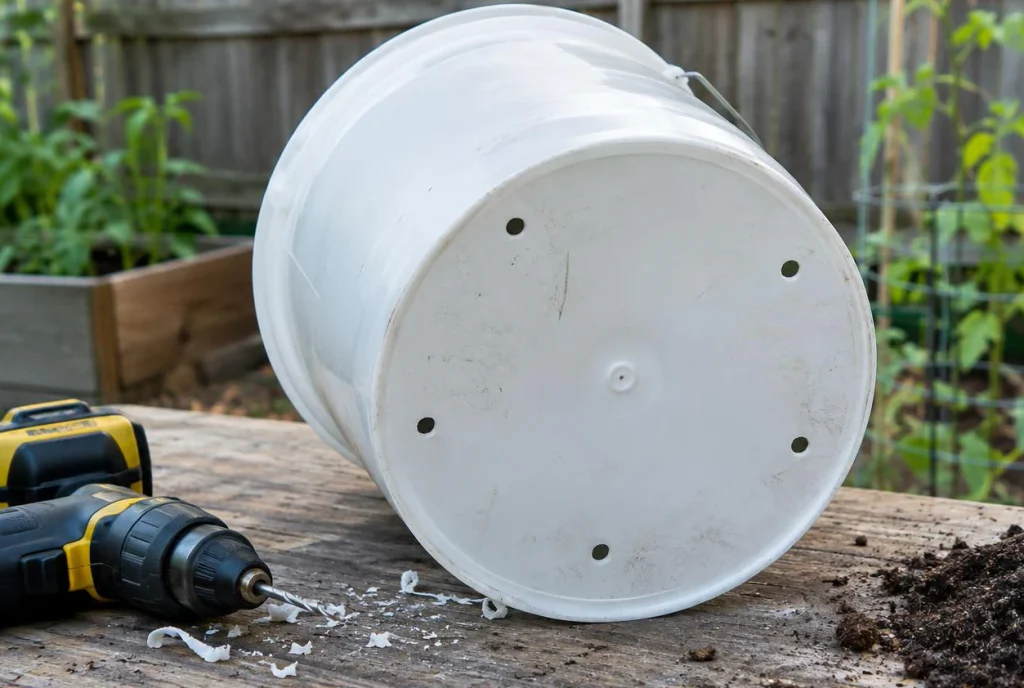
You can also place the bucket on pot feet, bricks, or another support so water can drain freely from underneath.
You do not need to add a thick layer of gravel to the bottom. The important thing is having adequate drainage and using an appropriate container mix.
Step 2: Clean a Reused Bucket
If you’re reusing a bucket from a previous growing season, wash it thoroughly and rinse it well before planting.
If the previous plant had a serious disease problem, using fresh growing mix is a safer option than reusing contaminated material.
Step 3: Consider Container Temperature
Dark containers can become quite warm in strong sunlight, particularly in hot climates.
If your summers are extremely hot, a lighter-colored container or some protection from intense afternoon heat can help keep the root zone from overheating.
How to Plant Cucumbers in a 5-Gallon Bucket
Step 1: Fill the Bucket With Potting Mix
Fill the bucket with quality container potting mix, leaving a little space below the rim so you can water without soil washing over the sides.
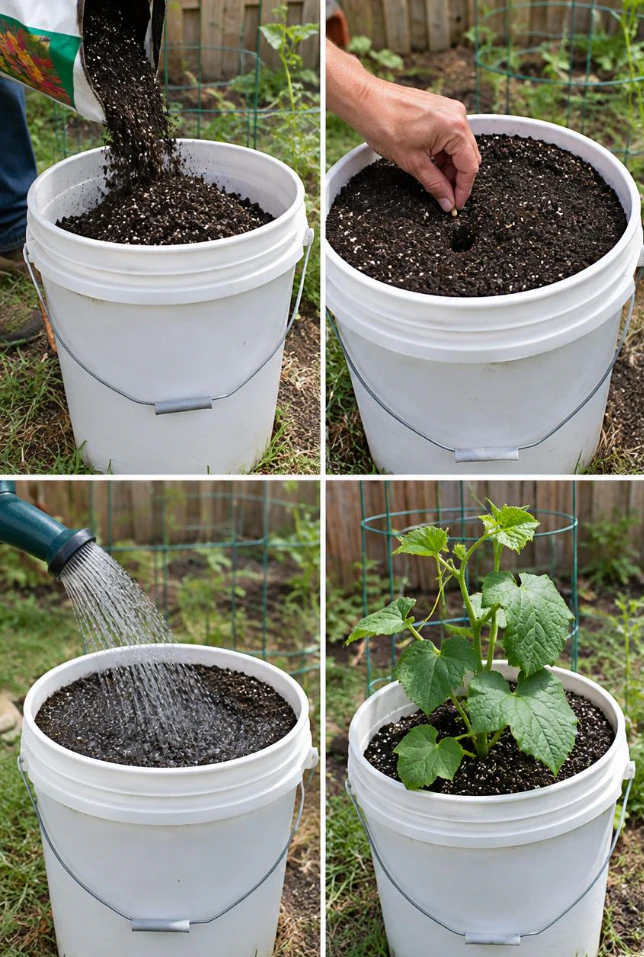
If you use compost, mix it into the container medium rather than creating a separate thick layer.
Follow the fertilizer label if you’re adding a slow-release fertilizer.
Step 2: Plant the Seeds or Seedling
For direct sowing, follow the seed packet’s recommended planting depth and sow more than one seed if you want insurance against poor germination.
Once the seedlings are established, thin them to one healthy plant.
If you’re transplanting a cucumber seedling, handle the root ball gently and plant it at approximately the same depth it was growing in its original container.
Cucumber roots can be sensitive to disturbance, so avoid unnecessarily rough handling during transplanting.
Step 3: Water Thoroughly
After planting, water slowly until excess water drains from the bottom of the bucket.
This settles the potting mix around the seeds or roots and confirms that the drainage system is working properly.
Step 4: Place the Bucket in the Right Location
Choose a sunny location where the plant will receive plenty of direct light and where you can easily water it.
If you’re growing a vining variety, place the bucket where its trellis or support can be secured safely.
In very hot climates, some afternoon shade may help protect the plant from excessive heat while still providing enough light for growth.

- 5 Gallon Food Grade
- Made in USA
- Buckets comes with Metal handles. Lids sold separately.
How to Care for Cucumbers in a 5-Gallon Bucket
Sunlight
Aim for at least 6 hours of direct sunlight each day. More sunlight can support stronger growth and fruit production, provided the plant is not exposed to excessive heat.
In very hot climates, some afternoon shade can help reduce heat stress.
Watering
Watering is one of the most important parts of container cucumber care.
Instead of following a fixed schedule, check the potting mix regularly. If the upper portion of the mix has become dry, water thoroughly until excess water drains from the bottom.
During hot or windy weather, a mature cucumber plant may need water every day, while cooler or cloudy conditions may require less frequent watering.
The goal is consistent moisture without keeping the roots constantly saturated.
A few useful habits:
- Check the soil regularly during hot weather.
- Water thoroughly rather than giving the plant a tiny splash.
- Water the soil around the plant rather than repeatedly wetting the foliage.
- Increase monitoring during heat waves.
- Make sure excess water can drain freely.
Large swings between very dry and very wet conditions can contribute to poor fruit quality, including bitter or misshapen cucumbers.
Fertilizing
Container plants have a limited supply of nutrients, and frequent watering can move nutrients out of the container.
Follow the fertilizer label rather than applying a stronger dose.
A balanced fertilizer can be useful during vegetative growth. Once the plant begins flowering and producing fruit, continue feeding according to the product directions and avoid excessive nitrogen, which can encourage leafy growth.
COMMON MISTAKE: More fertilizer does not mean more cucumbers. Over-fertilizing can cause salt buildup and root damage.
Mulching
Once the plant is established, a thin layer of mulch can help slow evaporation and moderate the temperature of the potting mix.
Suitable options include:
- Straw
- Shredded leaves
- Fine wood chips
Keep mulch slightly away from the main stem so the stem does not remain in constant contact with damp material.
Do Cucumbers Need a Trellis in a 5-Gallon Bucket?
Vining cucumbers benefit greatly from a trellis or other support. Bush varieties are more compact and may grow without one, although a small cage can still keep the plant more organized.
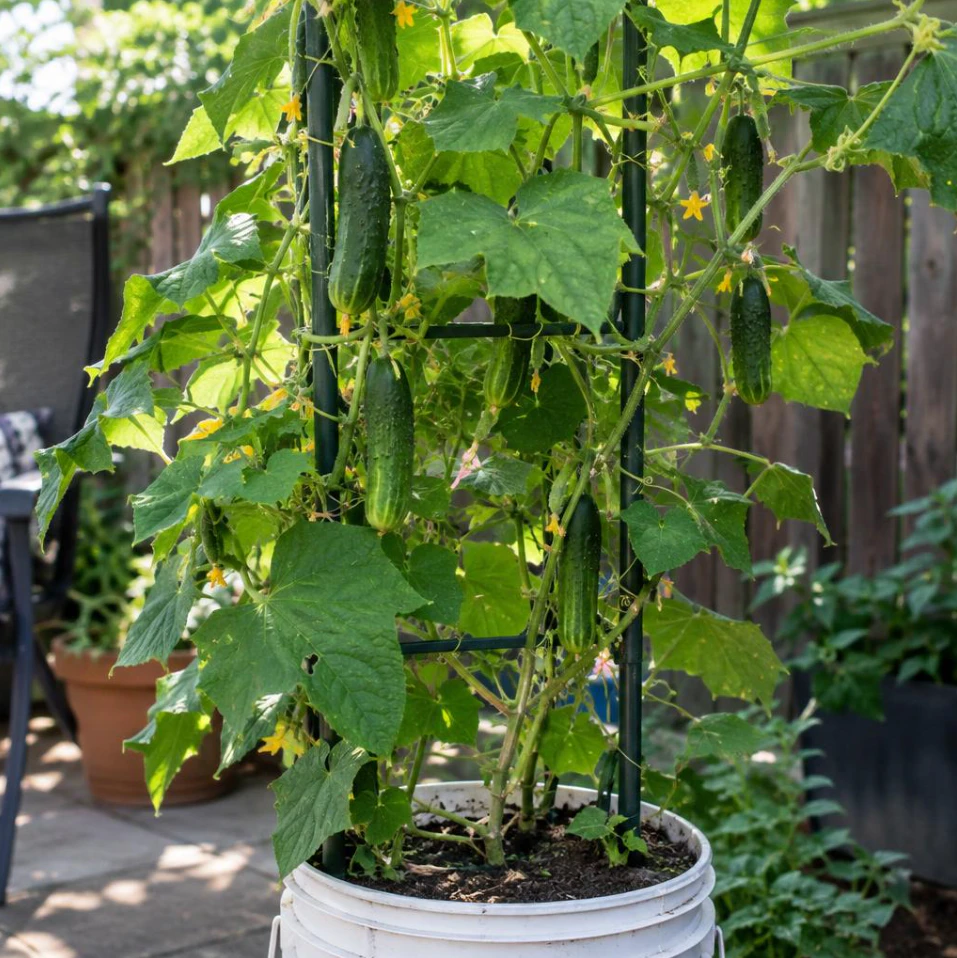
Vertical growing is especially useful in small spaces because it allows the vines to grow upward instead of spreading across the ground.
Good support options include:
- Tomato cage: Suitable for bush and compact varieties
- Three stakes with twine: Useful for compact vining plants
- Trellis panel or netting: Good for vigorous vining varieties
- Wall or balcony railing: Useful when the support is strong enough to handle the plant
Install the support early rather than waiting until the plant becomes large. Tall cucumber vines can become top-heavy, so make sure the support itself is secure.
University of Maryland Extension also recommends vertical supports such as stakes and fencing panels for tall or vining container plants.
Do Cucumbers Need Pollination?
Most traditional cucumber varieties produce separate male and female flowers on the same plant and need pollinators to transfer pollen for normal fruit development.
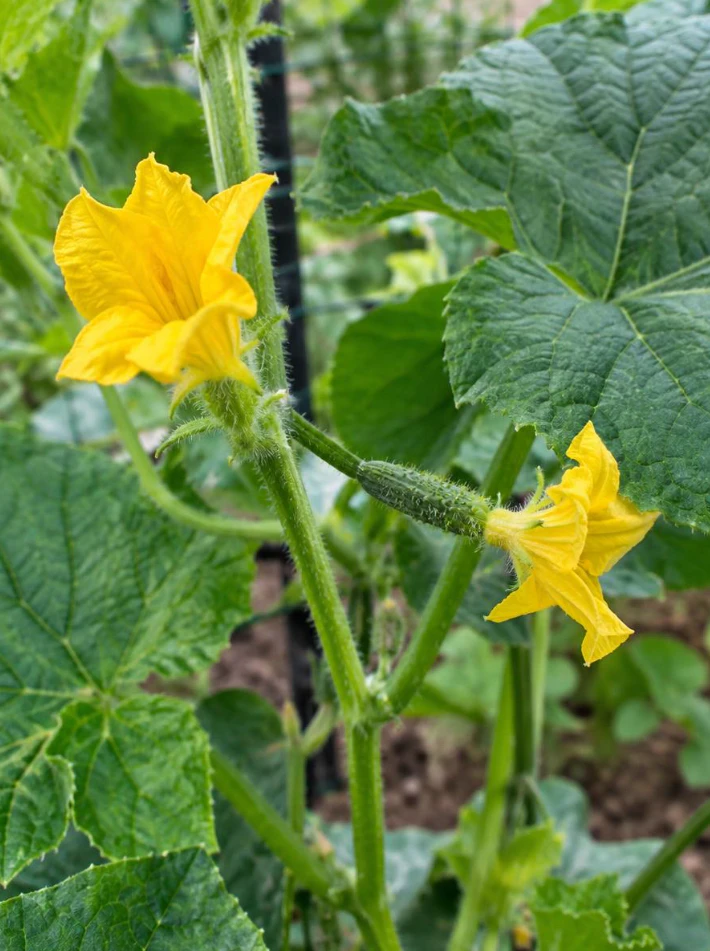
The first flowers are often male flowers. Female flowers have a small cucumber-shaped swelling behind the flower.
If female flowers appear but the tiny fruits shrivel and fall off, poor pollination can be one possible cause. Cold, rainy, cloudy, or very hot conditions can also interfere with fruit set.
How to Hand-Pollinate Cucumbers
If pollinators are scarce, you can hand-pollinate:
- Identify an open male flower.
- Gently remove or fold back the petals.
- Use the male flower or a small soft brush to transfer pollen to the center of an open female flower.
- Do this in the morning when flowers are open.
An Easier Option for Enclosed Spaces
Parthenocarpic cucumber varieties can produce fruit without pollination, making them useful for greenhouses, enclosed patios, and locations where pollinating insects have limited access.
When to Harvest Cucumbers
Harvest cucumbers based on the recommended size for the variety rather than waiting for a particular number of days.
As a general guide:
| Cucumber Type | Common Harvest Range |
| Pickling cucumbers | About 2–4 inches |
| Slicing cucumbers | About 6–8 inches |
| English or specialty types | Depends on the variety |
Always check the seed packet because ideal harvest size varies among cultivars.
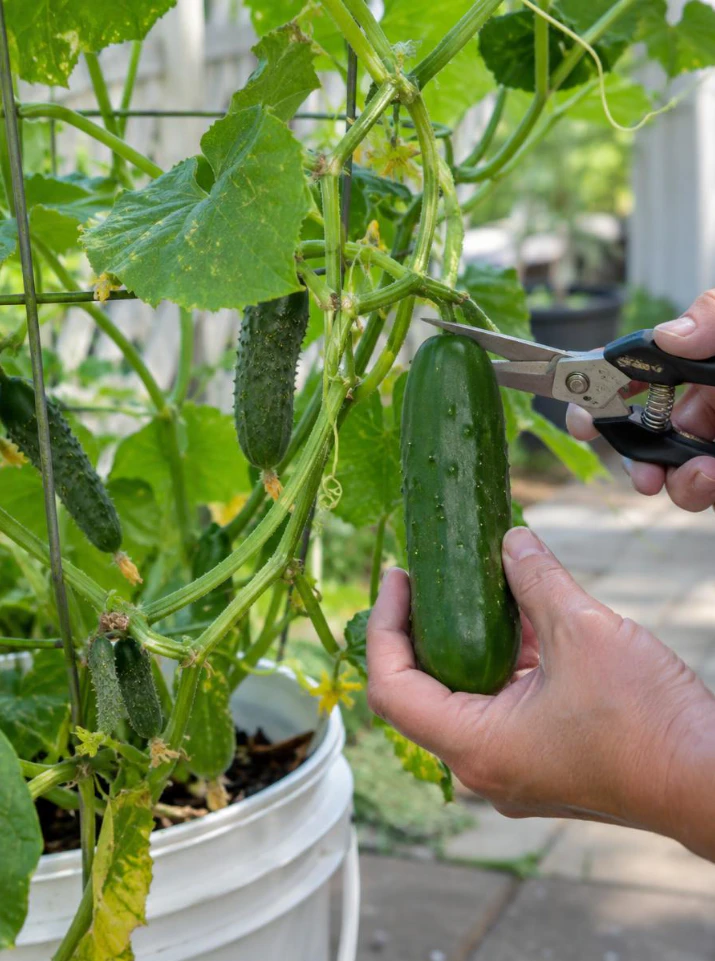
Use scissors or pruners to cut the cucumber from the vine instead of pulling hard on the fruit.
Check the plant every day or two once production begins. Regular harvesting encourages continued production and prevents oversized fruit from remaining on the plant.
Common Problems With Bucket-Grown Cucumbers
Yellow Leaves
Possible causes include:
- Overwatering
- Poor drainage
- Nutrient deficiency
- Disease
- Natural aging of older leaves
What to do:
Check the moisture level and drainage first. If older lower leaves are yellowing while new growth looks healthy, some natural aging may be involved. If the plant is generally pale and growth is weak, nutrient availability may also be a factor.
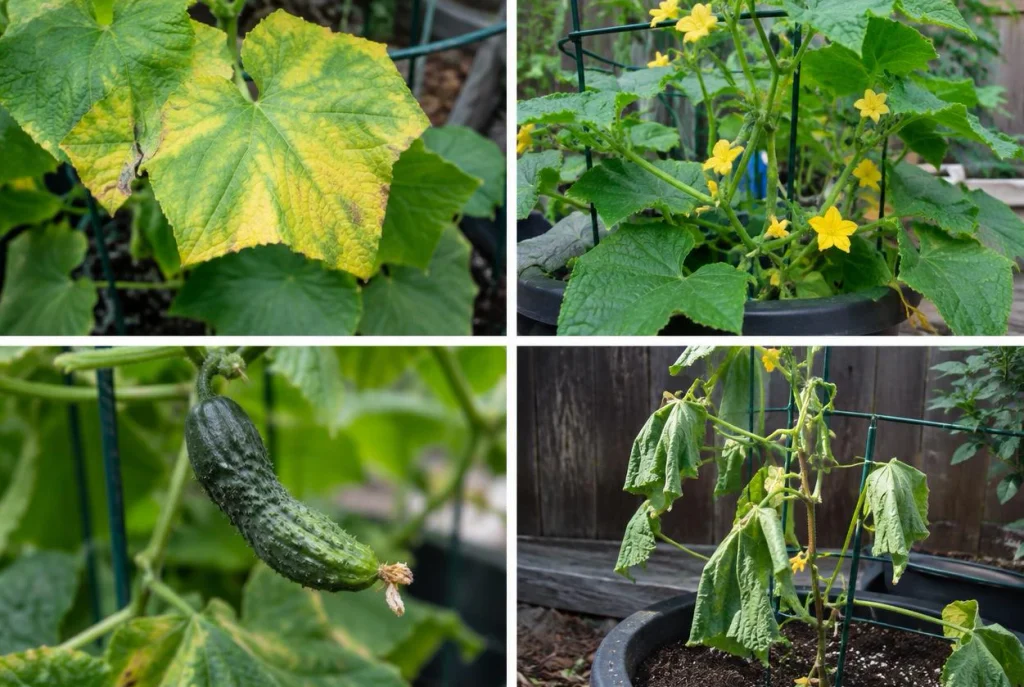
Flowers but No Fruit
Possible causes include:
- Male flowers appearing before female flowers
- Poor pollination
- Excessive heat
- Water stress
- Excessive nitrogen
The first male flowers are normal. If female flowers appear but fruit repeatedly fails to develop, check pollination and environmental conditions. High temperatures can reduce fruit set in cucumbers.
Bitter Cucumbers
Bitter flavor can be influenced by variety, environmental stress, and growing conditions. Water stress and heat can contribute, but not every bitter cucumber is caused by the same problem.
What to do:
- Keep moisture reasonably consistent.
- Protect the plant from extreme heat where possible.
- Harvest fruit at the recommended size.
- Consider a variety known for good eating quality.
If a cucumber is bitter, the bitter compounds can be concentrated toward the stem and skin, although removing those parts does not always make the fruit palatable.
Wilting Plants
Wilting can result from:
- Dry potting mix
- Heat stress
- Root problems
- Bacterial wilt
- Other diseases
Check the moisture level first. If the soil is moist but the plant repeatedly wilts, look for other signs of disease or root problems.
Bacterial wilt can cause sudden, persistent wilting and is associated with cucumber beetles. There is no cure for an infected plant, so affected plants should be removed and cucumber beetle management should be part of prevention.
Pests and Diseases
Common cucumber problems include:
Cucumber beetles: These insects chew leaves and flowers and can transmit bacterial wilt.
Aphids: They often cluster on young growth and the undersides of leaves. A strong stream of water can help dislodge light infestations.
Spider mites: Fine stippling and webbing can appear during hot, dry conditions.
Powdery mildew: Look for white, powdery growth on leaves.
Downy mildew: This can cause yellow or angular leaf spots and is favored by humid conditions.
Good airflow, consistent care, regular inspection, and avoiding unnecessary leaf wetting can help reduce disease pressure.
Common Mistakes to Avoid
Crowding several plants into one bucket.
For beginners, one healthy plant per 5-gallon bucket is easier to manage and reduces competition for water and nutrients.
Using garden soil as the main container medium.
Use a quality potting mix designed for containers.
Skipping drainage.
Make sure excess water can escape from the container.
Adding support too late.
Install the trellis or cage before the plant becomes large.
Letting the container dry out completely.
Check moisture regularly, especially during hot weather.
Over-fertilizing.
More fertilizer can damage roots and encourage excessive leafy growth.
Leaving oversized cucumbers on the plant.
Harvest regularly according to the variety’s recommended size.
Using a bucket that previously held chemicals.
Only use food-safe containers for growing edible crops.
Frequently Asked Questions
How many cucumbers will one 5-gallon bucket produce?
There is no reliable universal number. Yield depends on the variety, growing season, sunlight, pollination, watering, nutrition, and harvesting. A healthy vining variety can produce over an extended period when conditions are favorable.
Can cucumbers grow in partial shade?
They can tolerate less sunlight, but fruit production generally decreases as available light decreases. Aim for at least 6 hours of direct sun when possible. In very hot climates, some afternoon shade can actually help reduce heat stress.
What’s the best cucumber variety for a 5-gallon bucket?
Compact or bush varieties are usually the easiest starting point. If you’re growing on a balcony or in another location with limited pollinators, a parthenocarpic variety can be especially useful.
Always check the seed packet for mature plant size and growing recommendations before choosing a variety.
Is a black bucket bad for growing cucumbers?
Not necessarily. Black containers absorb more heat, which can become a problem in very hot, sunny conditions. If your climate is hot, consider a lighter-colored container or protect the container from intense afternoon heat while keeping the foliage in adequate sunlight.
Can I grow anything else in the same 5-gallon bucket?
It’s generally better to grow one cucumber plant per bucket rather than combining cucumbers with another crop. Cucumbers are vigorous plants and can compete heavily for water and nutrients.
If you want companion plants or flowers to attract pollinators, growing them in nearby containers is usually easier.
Can I reuse the potting mix next year?
You can refresh container mix, but whether you should reuse it depends on the previous crop and its health.
Remove old roots and mix in fresh container medium and compost as appropriate. If the previous plant had a serious soil- or root-related disease, replacing the growing medium is the safer option.
