How to Grow Creeping Thyme: Planting, Care, and Ground Cover Guide Secrets
Creeping thyme is a sun-loving, aromatic ground cover that softens pathways, fills gaps between stepping stones, and suppresses weeds with minimal fuss. To grow it successfully, give it full sun, well-drained soil, and light, infrequent watering once established. Plant in spring after frost, space 8–12 inches apart, and avoid heavy fertilizers. With the right spot and a little patience, creeping thyme knits into a fragrant, bee-friendly carpet that’s easy to maintain.
- What Is Creeping Thyme?
- Key Benefits of Growing Creeping Thyme
- Best Varieties for Ground Cover
- Where Creeping Thyme Thrives
- How to Plant Creeping Thyme
- Caring for Creeping Thyme
- Using Creeping Thyme as Ground Cover
- Climate and Seasonal Care
- Propagation: Divisions, Cuttings, and Seed
- Pests, Diseases, and Common Problems
- Troubleshooting Guide
- Companion Ideas and Design Tips
- Harvesting and Light Culinary Use
- Frequently Asked Questions
- Conclusion
What Is Creeping Thyme?
Creeping thyme refers to several low-growing thyme species and cultivars in the mint family (Lamiaceae) commonly used as ornamental ground covers. Unlike culinary common thyme (Thymus vulgaris), creeping forms spread horizontally, forming dense mats just 1–3 inches tall when not in bloom.
- Botanical types often sold as “creeping thyme”: Thymus serpyllum (wild thyme), Thymus praecox, and prostrate forms of Thymus vulgaris and related hybrids.
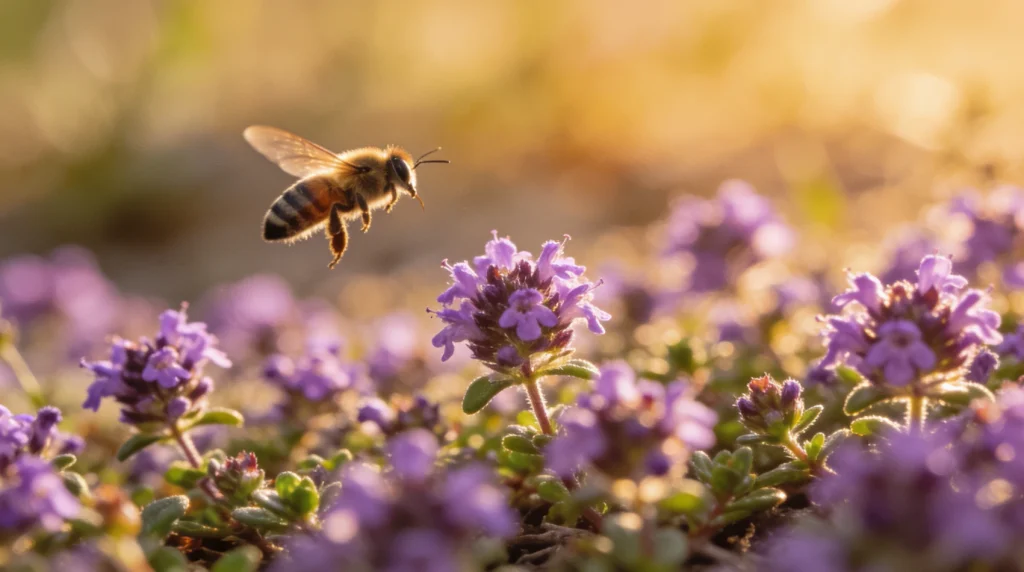
- Look and bloom: Tiny evergreen to semi-evergreen leaves; pink, magenta, lavender, or white blooms in late spring to early summer that attract pollinators.
- Use: Ground cover, rock gardens, between pavers, erosion control on sunny slopes, edging, and lawn alternatives in low-traffic areas.
Key Benefits of Growing Creeping Thyme
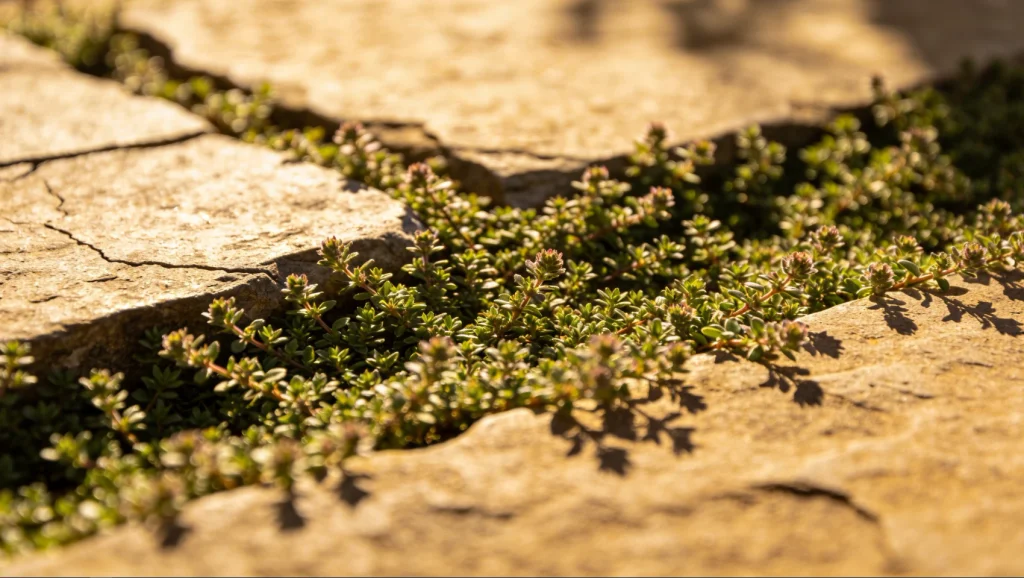
- Low water needs once established thanks to drought tolerance.
- Weed suppression through dense coverage.
- Pollinator-friendly flowers rich in nectar.
- Soft, aromatic foliage releases scent when brushed.
- Deer- and rabbit-resistant in many regions.
Best Varieties for Ground Cover
Choose varieties for flower color, vigor, and height that match your space and traffic levels.
- Thymus serpyllum (wild thyme): Spreads readily; pink to magenta flowers; 2–3 inches tall.
- Thymus praecox ‘Coccineus’: Vibrant magenta blooms; fast spreader; good between stones.
- Thymus praecox ‘Elfin’: Very tight, low habit (about 1 inch); slower spread; great for small gaps.
- Thymus serpyllum ‘Magic Carpet’: Dense mat with masses of rose-pink flowers.
- Thymus serpyllum ‘White Creeping’: White flowers brighten paths and contrast darker foliage.
Note: Most creeping thymes are ornamental first. Some leaves are edible but usually less flavorful than culinary thyme.
Related: A Beginner’s Guide to Creating a Cut Flower Garden (10 Easy Flowers to Start With)
Where Creeping Thyme Thrives
- Sunlight: Full sun (6–8+ hours daily). Light bloom and loose growth in shade.
- Hardiness: Commonly hardy in USDA Zones 4–9, depending on cultivar. In colder zones, provide excellent winter drainage.
- Soil: Well-drained, sandy or loamy soil; pH ~6.0–8.0. It tolerates poor soils but struggles in heavy, wet clay.
- Moisture: Moderate during establishment; drought-tolerant after rooting. Avoid soggy conditions.
- Traffic: Light foot traffic is fine; choose tighter, lower cultivars for stepping stones. Not suitable for high-play lawns.
How to Plant Creeping Thyme
Timing
Plant in spring after the last frost when soil warms, or in early fall so roots establish before winter. In hot-summer regions, spring is safest.
Site Prep
- Clear weeds thoroughly. Creeping thyme is a decent weed suppressor once filled in but loses ground to established weeds at planting time.
- Improve drainage by loosening the top 6–8 inches of soil and mixing in coarse sand or fine gravel if your soil holds water. Raised beds or mounded planting areas help in heavy soils.
- Go easy on fertility: Avoid rich compost or high-nitrogen fertilizers that cause floppy growth.
Planting Steps
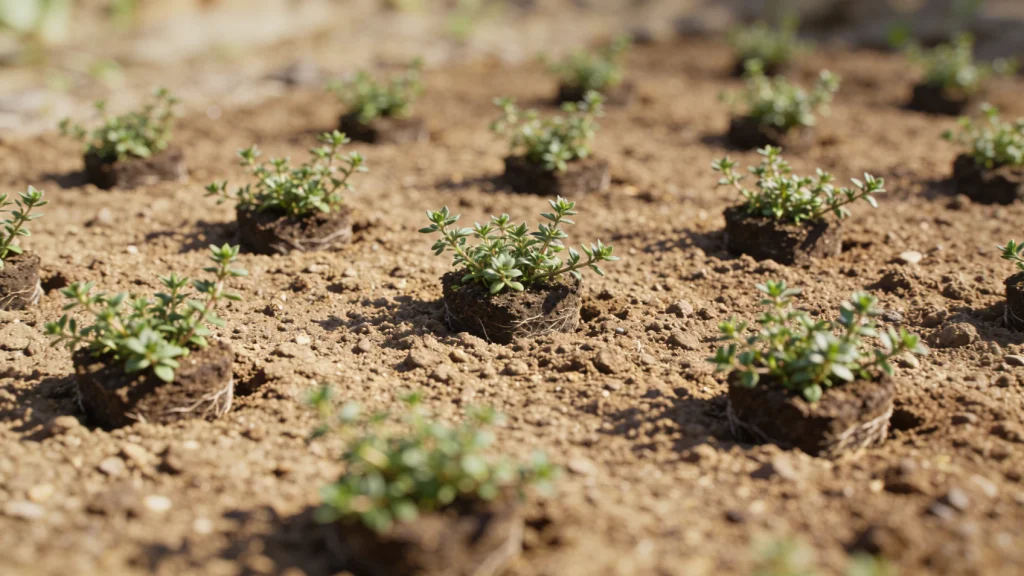
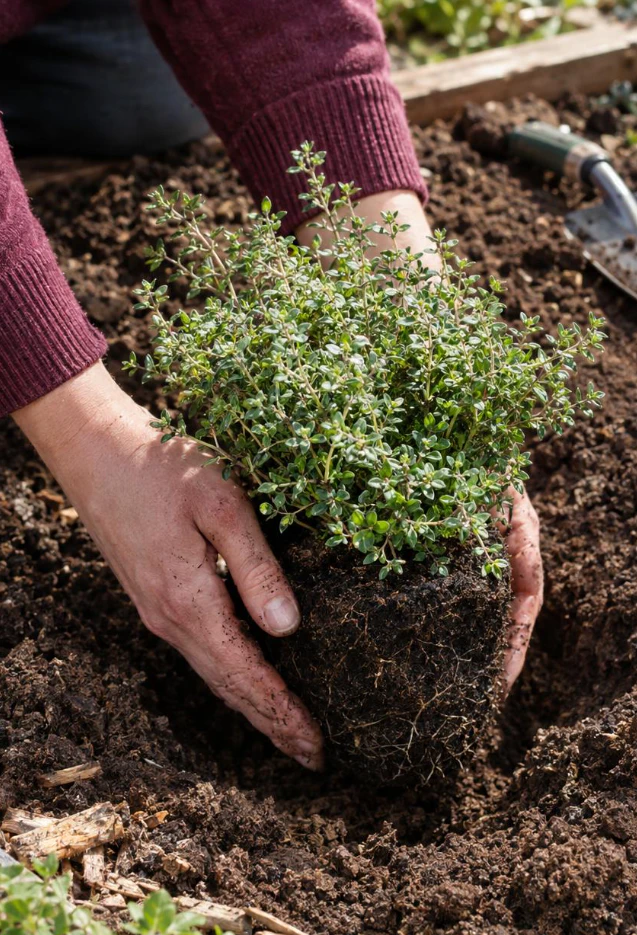
- Spacing: Set starts 8–12 inches apart (closer for quicker coverage; farther for economy). For tight paver joints, use plugs or divisions.
- Plant depth: Keep the crown level with the surrounding soil. Don’t bury stems.
- Water in gently to settle soil and remove air pockets.
- Mulch lightly with fine gravel around plants to conserve moisture and discourage weeds while keeping crowns dry.
Starting from Seed
- Indoors: Start 6–8 weeks before last frost. Press seeds onto the surface light aids germination and keep at 65–70°F. Germination may take 1–4 weeks. Transplant after frost.
- Outdoors: Direct sow onto prepared, weed-free soil in late spring. Keep evenly moist until seedlings establish. Establishment from seed is slower than from plugs.
Caring for Creeping Thyme
Watering
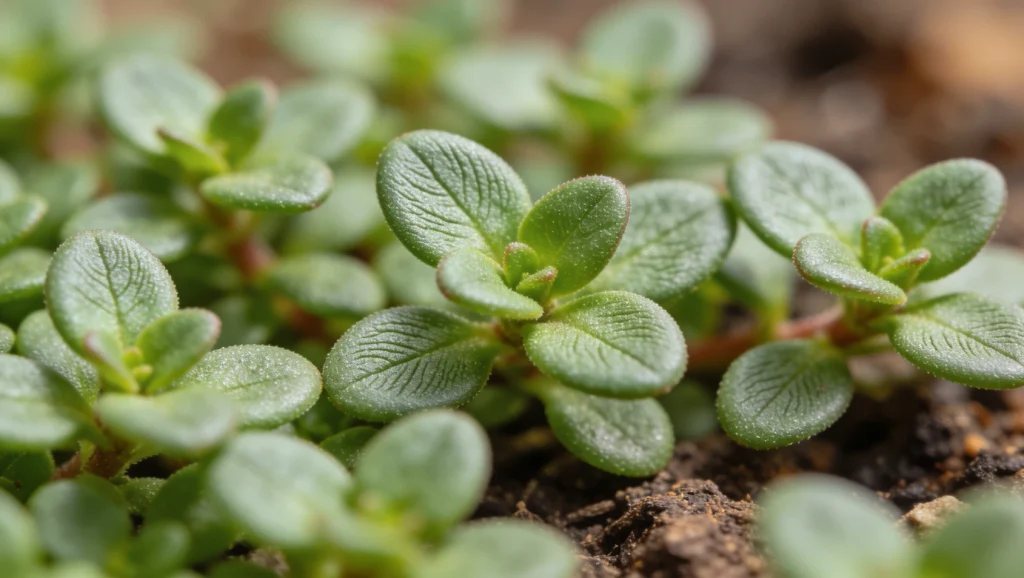
- Establishment (first 6–10 weeks): Water when the top inch of soil is dry. Aim for deep, infrequent watering rather than daily sprinkles.
- Established plants: Water sparingly. In most climates, rainfall suffices once plants fill in. Prolonged drought may require an occasional soak.
- Avoid overwatering: Soggy soil leads to root rot and winter dieback.
Fertilizing
- Creeping thyme rarely needs fertilizer. If growth is pale and weak in very poor soil, apply a light, balanced organic fertilizer once in spring.
- Excess nitrogen causes lush, floppy growth and fewer flowers.
Pruning and Grooming
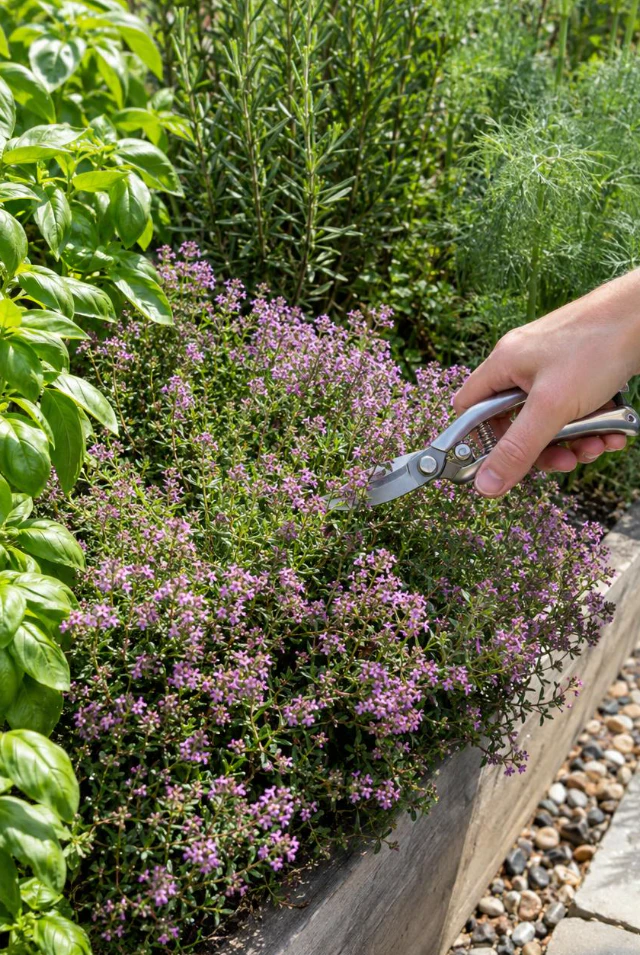
- After bloom: Shear lightly to tidy spent flowers and encourage dense regrowth.
- Spring cleanup: In cold-winter regions, trim out any winter-killed tips once new growth starts.
- Between pavers: Pinch runners to keep stones clear.
Mulch and Weed Control
- Use inorganic mulches like pea gravel around young plants to keep crowns dry.
- Avoid thick organic mulches that trap moisture against stems.
- Hand-weed early; once mats form, weeds struggle to break through.
Using Creeping Thyme as Ground Cover
Between Stepping Stones
- Choose compact cultivars like ‘Elfin’ for narrow joints.
- Backfill joints with gritty, fast-draining mix (sand plus compost or fine gravel).
- Expect occasional thinning where foot traffic is frequent; plug in small divisions as needed.
Slopes and Edges
- In sunny slopes with good drainage, space plants 8–10 inches apart for quicker erosion coverage.
- Water deeply the first season so roots anchor well.
Lawn Alternative
- Thyme lawns look best in sunny, low-traffic areas and bloom in late spring to early summer.
- Combine a few cultivars for a tapestry effect and staggered flowering.
- Mowing isn’t necessary, but a once- or twice-yearly light shear can even out the surface.
Climate and Seasonal Care
- Cold winters (Zones 4–5): Prioritize drainage. Avoid winter-wet sites. A thin layer of gravel mulch helps. Snow cover is fine; ice plus saturated soil is risky.
- Hot summers (Zones 8–9): Afternoon shade is acceptable where heat is extreme, as long as soil drains well. Water during prolonged droughts, letting soil dry between.
- Humidity: Good air flow reduces mildew risk. Avoid overhead irrigation in humid spells if possible.
Propagation: Divisions, Cuttings, and Seed
- Division (easiest): In spring or early fall, lift a section and separate rooted pieces. Replant promptly and water in.
- Cuttings: Take 2–3 inch tip cuttings in late spring or early summer. Strip lower leaves, dip in rooting hormone (optional), and stick in a gritty mix. Keep slightly moist until rooted.
- Seed: Cheapest, but slowest to full coverage. Expect variability in color and habit with non-named strains.
Pests, Diseases, and Common Problems
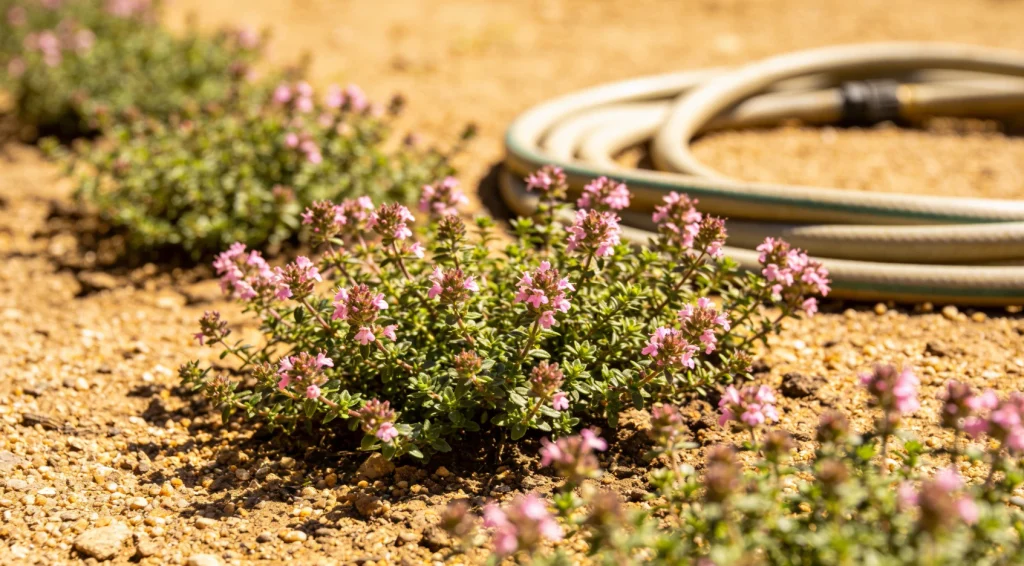
- Root rot: Caused by poor drainage or overwatering. Improve soil texture; avoid heavy mulches.
- Powdery mildew: Occasionally in humid, shaded spots. Increase sun/airflow; prune lightly; water at soil level.
- Aphids/spider mites: Rarely serious. Rinse with water or use insecticidal soap if needed.
- Winter dieback: Most often drainage-related. Replant on raised mounds and select hardy cultivars.
Troubleshooting Guide
- Plants are leggy and thin: Too much shade or nitrogen. Move to sunnier spot or cut fertilizer.
- Brown patches after winter: Waterlogged soil or ice damage. Improve drainage; trim dead areas to encourage fill-in.
- Poor flowering: Insufficient sun, excessive fertility, or too-wet soil.
- Weeds reappearing: Fill gaps with additional plugs; hand-weed early before seed set.
Companion Ideas and Design Tips

- Rock garden partners: Sedum, hens-and-chicks (Sempervivum), dwarf dianthus, and blue fescue.
- Pollinator strip: Mix with lavender, salvia, and catmint for a long-blooming, bee-friendly border.
- Color coordination: White-blooming thyme brightens edges of sunny beds; magenta cultivars pop against silver foliage plants.
Harvesting and Light Culinary Use
You can snip small amounts of foliage to add aroma to dishes, though most creeping thymes have milder flavor than common thyme. Harvest sparingly and avoid heavy cutting in late fall so plants enter winter with adequate foliage.
Frequently Asked Questions
How fast does creeping thyme spread?
In good sun and drainage, expect 6–12 inches of spread per year from healthy plants. Compact cultivars like ‘Elfin’ spread more slowly; vigorous types can fill faster with regular light watering during establishment.
Will creeping thyme choke out grass or weeds?
It suppresses many weeds once dense, but it won’t outcompete established turf or aggressive perennials. Clear the area first and plant closely for best coverage.
Can I walk on creeping thyme?
Yes, lightly. It tolerates occasional foot traffic, especially between stepping stones. Constant or heavy traffic will thin plants use wider stones or designate pathways to protect the cover.
Does creeping thyme stay green in winter?
Many cultivars are evergreen to semi-evergreen in mild winters, turning bronzy or thinning in colder zones. Color typically returns with spring growth.
Why is my creeping thyme turning brown?
Common causes include poor drainage, overwatering, deep shade, or winter injury. Check soil moisture first improve drainage, water less often, and trim out dead sections to encourage regrowth.
Conclusion
Growing creeping thyme is straightforward when you match it with full sun and well-drained soil. Space plants 8–12 inches apart, water lightly after establishment, and shear once or twice a year to keep mats dense. In return, you’ll get a fragrant, colorful, low-maintenance ground cover that welcomes pollinators and softens hardscape edges beautifully.