Why Are There Tiny Flies in My Houseplants? (A Simple Guide to Getting Rid of Fungus Gnats)
You’ve created a beautiful indoor oasis to get you through the winter. Your houseplants are looking happy, and you’re enjoying that little touch of green in your home. But as you’re enjoying your morning coffee, you see them: tiny, annoying black flies buzzing lazily around your favorite plant, hovering near your computer screen, and generally making a nuisance of themselves.
I’ve been there, and I know how incredibly frustrating it can be. You start to question everything: Is my plant dying? Is my home dirty? Where did they even come from?
The good news is, you’re not alone, and you’re not a bad plant parent! These pests are most likely Fungus Gnats, and the even better news is that they are relatively easy to get rid of for good with a few simple, natural steps. In this guide, I’m going to walk you through exactly what they are and my simple, 2-part strategy to eliminate them permanently.
First, Let’s Identify the Annoying Intruder
Before we can fight them, we need to know who our enemy is. Those tiny flies are almost certainly Fungus Gnats.
What They Look Like (and How They’re Different from Fruit Flies)
Fungus gnats look a lot like miniature mosquitoes. They are small, dark, and have a clumsy, slow way of flying. You’ll usually find them crawling on the soil of your houseplants or flying aimlessly around the pot. They are attracted to moisture and decaying organic matter. Fruit flies, on the other hand, are typically found in the kitchen, are more robust flyers, and are attracted to ripening or fermenting fruit.
The Real Problem Isn’t the Flies… It’s What’s in the Soil
This is the most important thing to understand. The adult flies you see are annoying, but they are mostly harmless to your plant. The real problem is their children. The adult flies lay their eggs (up to 200 at a time!) in the top layer of moist potting soil.
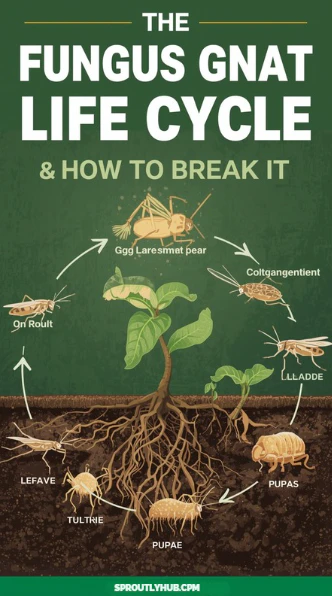
These eggs hatch into tiny, translucent larvae that live in the soil. These larvae are the ones that can cause damage, as they feed on fungi, organic matter, and sometimes, the delicate, tender roots of your seedlings or plants.
The Big Question: Why Did They Choose My Houseplants?
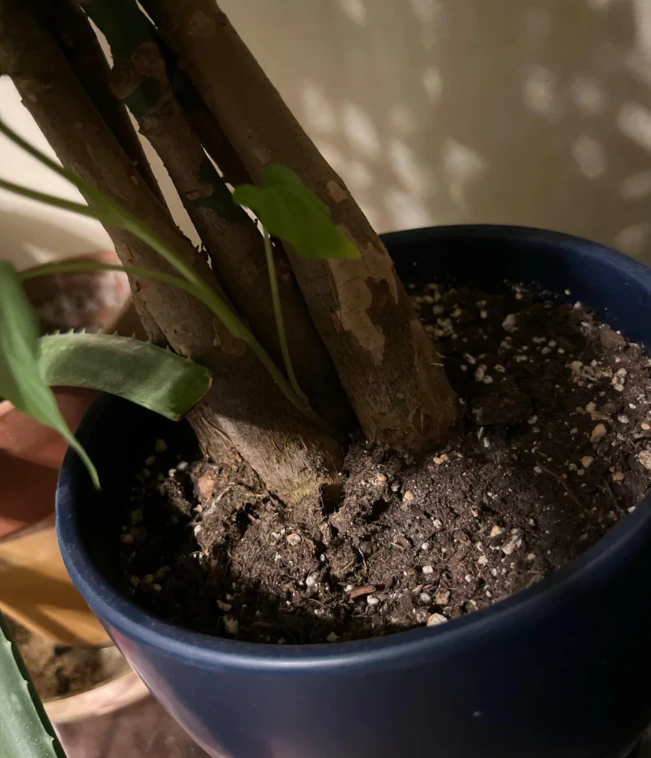
When I had my first major fungus gnat outbreak, I was so confused. Why my plants? Why now? The answer, I learned, was embarrassingly simple.
The one and only reason you have fungus gnats is because your soil is consistently too wet.
That’s it. Fungus gnat larvae cannot survive in dry soil. Their entire life cycle depends on a consistently moist, boggy environment. If you have a fungus gnat problem, it is a clear and direct signal that the top layer of your soil is not drying out properly between waterings. This is one of the most common beginner gardening mistakes, especially during winter when plants need less water.
My Proven 2-Part Strategy to Get Rid of Fungus Gnats for Good
To solve this problem permanently, we need to fight a war on two fronts: we have to eliminate the annoying adult flies that are laying eggs, and we have to destroy their nursery in the soil.
Part 1: Waging War on the Annoying Adult Flies
Getting rid of the adults is a crucial first step. If you can stop them from laying more eggs, you’ve already broken their life cycle.
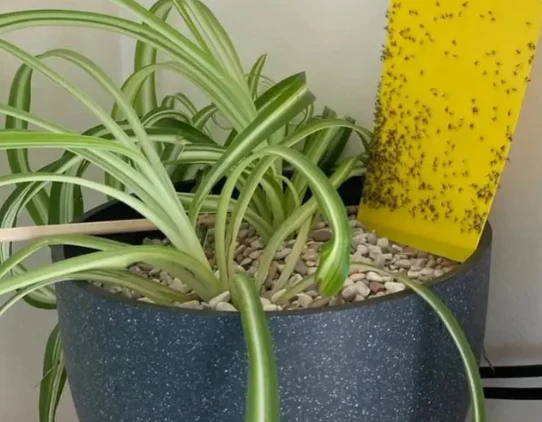
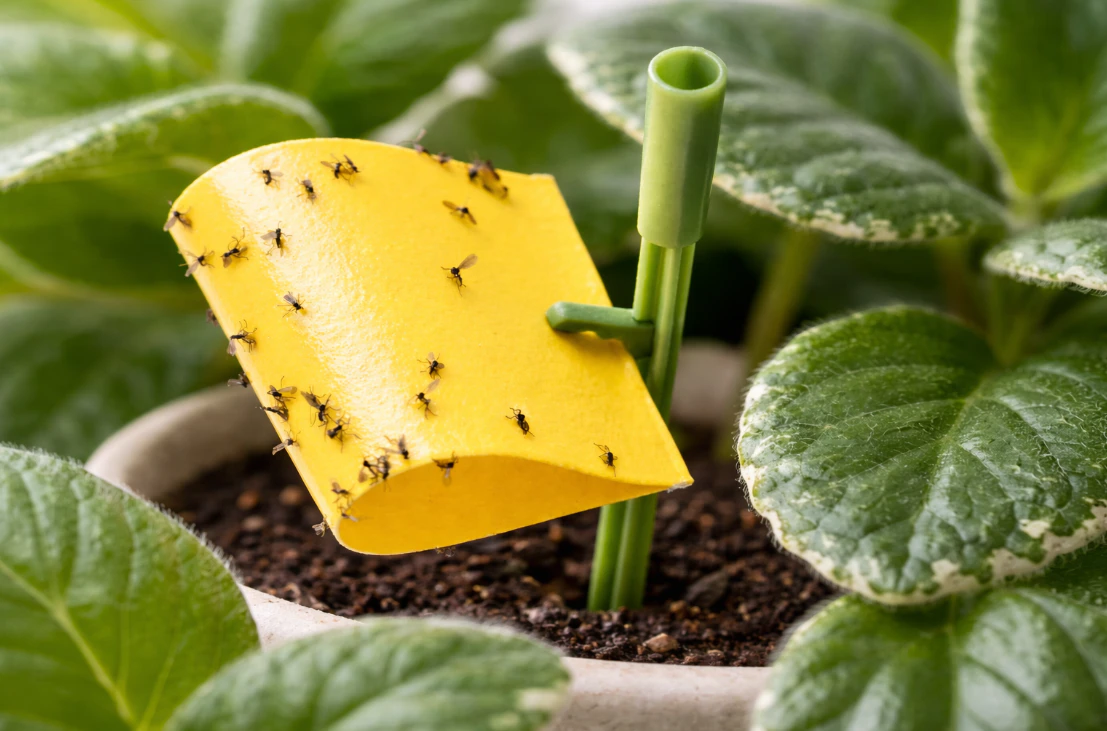
- Method 1: Yellow Sticky Traps (My Go-To First Step) These are my absolute favorite tool for this fight. Fungus gnats are naturally attracted to the color yellow. These traps are essentially bright yellow cards covered in a sticky glue. You simply place them in the soil of your pots. The gnats will fly to them, get stuck, and that’s the end of their egg-laying career. They are incredibly effective and give you a satisfying (and slightly gross) visual of how many you’re catching.
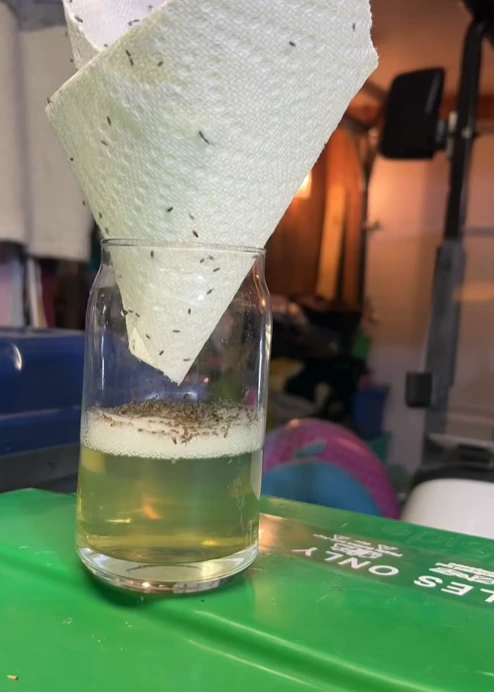
- Method 2: The Simple Apple Cider Vinegar Trap You can also make a simple DIY trap. Take a small jar, pour in about an inch of apple cider vinegar, and add a single drop of dish soap. The gnats are attracted to the smell of the vinegar, and the dish soap breaks the surface tension, causing them to fall in and drown.
Part 2: Eliminating the Next Generation in the Soil (The Most Important Step)
You can trap all the adults you want, but if you don’t deal with the larvae in the soil, a new generation will hatch and the problem will never go away.
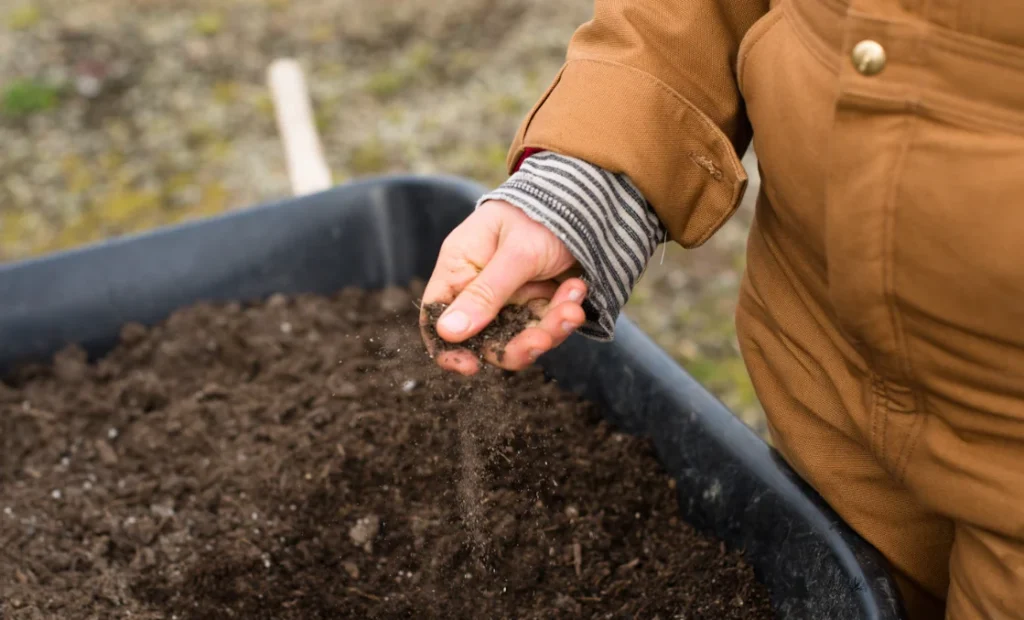
- Method 1 (The Easiest & Most Effective): Let Your Soil Dry Out! This is the most powerful weapon you have, and it’s completely free. Remember, the larvae need moisture to survive. You need to break the cycle of constant dampness. Before you water again, let the top 2-3 inches of your potting soil become completely dry to the touch. This might mean waiting a few extra days, or even a week, longer than you normally would. This dry environment will kill off the existing larvae and make the soil inhospitable for new eggs.
- Method 2 (For a More Active Approach): The Hydrogen Peroxide Drench If letting the soil dry out isn’t enough, you can take a more active approach. Go to your local pharmacy and buy a bottle of standard 3% hydrogen peroxide. Make a solution of one part hydrogen peroxide to four parts water. The next time your plant is ready for watering, use this solution to drench the soil thoroughly. The hydrogen peroxide will fizz a little as it reacts with the soil, and it will kill the fungus gnat larvae on contact without harming your plant’s roots.
@wild_dusty #planthaul #plantdad #plantlove #planttips #plantmom##howto #cute##planttime #planty #plant #plantjoy#holidayplants2020 #plants #fun #plantguy #happy ♬ Chill – RoséBlack
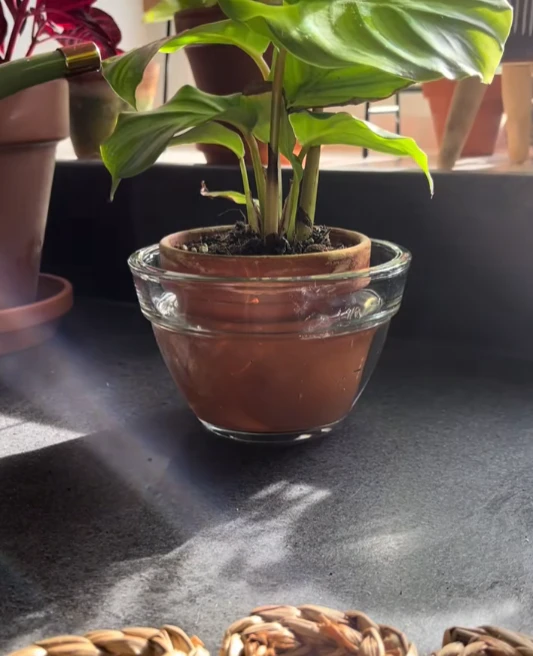
- Method 3 (A Proactive Technique): Learn to Bottom Water One of the best ways to keep the top of your soil dry is to “bottom water.” Instead of pouring water on top of the soil, place your pot (which must have drainage holes) in a tray of water for about 20-30 minutes. The soil will soak up the water it needs from the bottom, like a sponge, leaving the top surface much drier. This is a core technique I discuss in my Ultimate Guide to Container Gardening, and it’s fantastic for preventing fungus gnats.
How I Keep Them From Ever Coming Back
Once you’ve won the battle, a few simple habits will ensure you never have to fight it again.
- Always Use the Finger Test: Make it a habit to always check your soil before you water. It’s the golden rule of indoor plant care.
- Ensure Good Drainage: Make sure all your pots have drainage holes and that you are using a light, airy potting mix, not heavy garden soil.
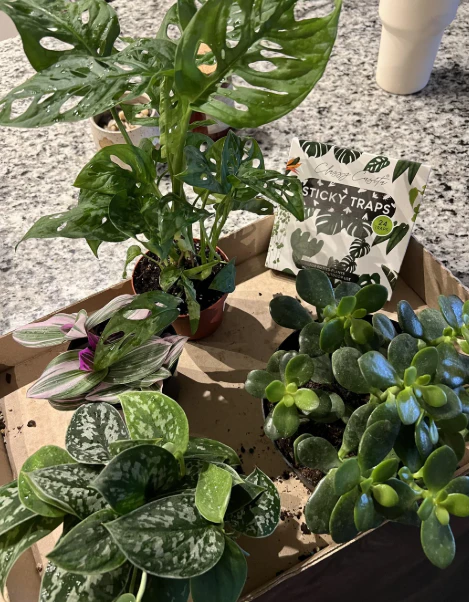
- Inspect New Plants: Before you bring a new plant home from the nursery, take a close look at the soil for any signs of these little flies. It’s much easier to prevent an infestation than to fight one. This is a crucial step I learned when setting up my first indoor garden for winter.
Conclusion: A Simple Lesson from a Tiny Pest
Dealing with fungus gnats is a rite of passage for almost every indoor gardener. While they are incredibly annoying, they are also excellent teachers. They provide a clear, unmistakable signal that we are giving our plants too much water—too much kindness.
By learning to control your watering and letting your soil dry out, you are not only getting rid of the gnats, but you are also becoming a better, more observant plant parent. So, don’t be discouraged. See this as a simple lesson from a tiny pest, and you’ll come out of it with happier plants and a healthier home.