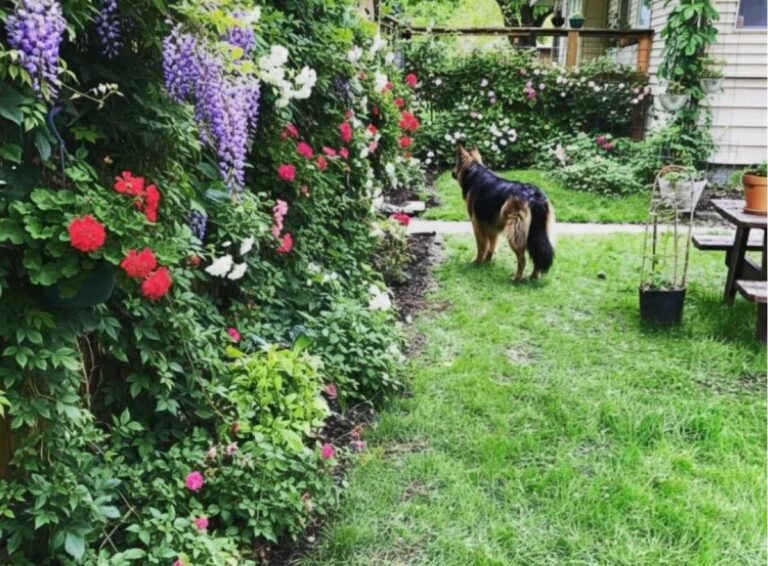
10 Budget-Friendly Front Yard Flower Bed Ideas (That Look Expensive!)
There’s a misconception that gardening costs a lot of money. Gardening doesn’t have to empty your bank account. In fact, some amazing gardens are built on creativity, not cash. You don’t need expensive hardscaping or a professional landscaper to enhance the appeal of your garden.
In this guide, I’m sharing 10 of my favorite budget-friendly strategies to give your front yard a high-end look for a fraction of the cost. Let’s make your neighbors jealous without breaking the bank.
The “Expensive Look” Mindset: Strategy Over Spending
Why do some gardens look expensive? Plants are usually not sparse. It’s about consistency. Expensive gardens feel intentional.

They have clean lines, defined spaces, and a sense of order. A chaotic mix of expensive plants will always look cheaper than a beautiful, well-planned arrangement of budget plants. So, skip the spending money. We’ll use our brains instead of our purchasing power.
10 Ideas to Glam Up Your Yard for Less
Here are the specific strategies I use to get that high-end look on a DIY budget.
1. The “Velvet Rope” Trick: Create Crisp Edging
If you only do one thing from this list, make it this one. A clean, clear edge between your lawn and your flower beds is the biggest difference between a messy yard and a professional yard. It screams, “I want this place taken care of.”

You don’t need those plastic edging strips or expensive stone borders. You just need a sharp spade. Simply dig a shallow trench (about 3-4 inches deep) along the border of your bed. This creates a shadow line that looks incredibly sharp and costs absolutely nothing.
Related: 8 Budget-Friendly DIY Garden Path Ideas for Small Backyards
2. Embrace the “Rule of Threes” with Cheap Plants
Beginners often make the mistake of buying one of everything, creating a “polka dot” effect that looks cluttered. Professional designers plant in masses.

Instead of buying one expensive $30 shrub, buy three (or five) smaller, cheaper perennials like Coneflowers (Echinacea) or Black-Eyed Susans. Group them together. By next year, they will merge into one large, impressive drift of color that looks like a million bucks.
3. The Magic of Dark Mulch
Mulch is the concealer of the garden world. It covers up uneven soil, suppresses weeds, and makes your plants pop. Dark brown or black mulch creates a high-contrast background that makes green leaves look greener.

The Budget Hack: Bagged mulch adds up. Check with your local tree service companies or city public works. They often give away wood chips for free or very cheap if you pick them up. Just make sure to check it for trash before loading!
Related: Easy Garden Design for Your Backyard Small Space
4. Grow Perennials from Seed (The Ultimate Savings)
We often think growing from seed is just for vegetables. But growing perennials (flowers that come back every year) from seed is the ultimate money-saver.

A single potted Lavender plant might cost $15. A packet of seeds costs $3 and contains 50 potential plants. It takes patience, but if you start them indoors in late winter, by summer you will have dozens of plants like Shasta Daisies or Columbine for pennies.
5. Use Rocks as Sculpture
Large rocks add weight, permanence, and texture to a flower bed. They anchor the design and look great even in winter.

Skip the expensive landscape supply yard. Go scavenging (legally!). Farmers often have piles of “field stones” they dug out of their fields and are happy to give away. Bury the bottom third of the rock into the ground to make it look like a natural outcropping.
6. The Monochromatic Color Scheme
This is a designer secret that costs zero dollars. Instead of planting every color of the rainbow, stick to a strict color palette.

A garden with only white and green plants (a “Moon Garden”) looks sophisticated and high-end. I once planted a bed with nothing but cheap white Petunias and silver Dusty Miller. Because I stuck to a theme, it looked incredibly elegant and upscale.
7. Fill Space Fast with Ornamental Grasses
If you have a big empty flower bed and a small budget, ornamental grasses are your best friends. They take up a lot of space, grow quickly, and provide modern, architectural movement.

The Budget Hack: Grasses are incredibly easy to divide. Buy one large pot of Maiden Grass. Take it out and saw the root ball into three separate chunks. Plant them separately. Boom—you just got three plants for the price of one.
8. The “Spiller” Effect on Walkways
Hard lines can look harsh and cheap. Softening the edges of your concrete walkway or driveway makes your landscape look established and lush.

The Technique: Plant low-growing, sprawling plants right at the very edge of your bed, allowing them to spill over onto the pavement. Creeping Thyme or Alyssum work wonders here. It blurs the lines and releases a lovely scent when you brush past, adding a sensory luxury.
Related: 25 Trendy Front Yard Flower Bed Ideas
9. Upcycle a Focal Point
Every garden needs a “star” to draw the eye. Usually, this is an expensive fountain or statue. But you can make your own using interesting objects you already have.

My friend David took an old, rusty wheelbarrow, drilled drainage holes, and filled it with spilling petunias. Parked in the middle of a green flower bed, it looked charming and rustic. Just make sure it looks “intentional” and not like trash you forgot to pick up!
10. Lighting on a Dime
Lighting takes a garden from “nice” to “magical” instantly. But wiring outdoor lights is expensive.

Use solar path lights (you can find cheap packs under $20), but don’t line them up like a runway. Tuck them inside the flower beds. Hide one behind a bush to cast a glow upward. Pools of light and shadow look much more high-end than a straight line of lights.
My Top 3 Budget Mistakes (So You Don’t Make Them)
I learned these lessons the hard way, so hopefully, you can skip the failure part.
1. Buying the “Instant Garden”
I used to buy the biggest plants I could afford because I wanted it to look good now.

- The Reality: Large plants suffer more transplant shock. A smaller “quart” size perennial will often adapt faster and outgrow a larger “gallon” size plant within one season. Patience is your wallet’s best friend.
2. Ignoring the Soil
I once spent my entire budget on plants and put them into hard clay without compost. They all died.
- The Rule: Spend 20% of your budget on the soil. A $5 plant in a $1 hole will thrive; a $50 plant in a 50-cent hole will die. Feed your soil first.
3. The “Clearance Rack” Trap
We all love a discount, but be careful with the clearance rack.

- The Risk: Sometimes those plants are diseased or infested. Bringing home a cheap plant with spider mites can infect your entire garden. Inspect them closely. If it looks brown or mushy, walk away. It’s not a bargain if it kills your other plants.
Conclusion: You Can’t Buy “Charm”
Here is the bottom line: You can’t buy charm at a store. You create it. A budget-friendly garden often has more soul than a professionally installed one because you put your thought and care into every inch of it.

Start small. Pick one bed. Try the edging trick. Scatter some seeds. You will be amazed at how much high-end impact you can create with just a little bit of effort and creativity. So, put that wallet away and grab your spade. Your neighbors are going to be jealous.