

Balcony to Backyard: 18 Fruit Trees You Can Grow Anywhere!
To be honest, when we picture fruit trees, we imagine huge orchards, tractors, and countless acres of land. For years, looking out on my small concrete porch, I thought my dream of growing fruit was impossible. I thought I would just have to buy apples from the grocery store.
Boy, was I wrong.
Here’s the truth: You don’t need a farm to grow fruit. You don’t even need a yard. Whether you have a sunny porch, a small deck, or just a bright window, you can grow your own little garden. I’ve grown juicy peaches and sweet figs in a fruit tub right outside my living room door.
In this article, I’m sharing 18 amazing fruit trees that can be grown in pots and small spaces. I’ve categorized them to help you find the perfect spot for your climate. Let’s turn that small space into your own personal grocery store.
Best Soil for Growing Fruit Trees Anywhere
One of the biggest reasons fruit trees fail especially when grown in containers or small spaces—is poor soil quality. Even fruit trees that are labeled as “easy to grow anywhere” still need the right soil to stay healthy and productive.
For fruit trees grown in pots or limited spaces, the best soil is a well-draining, nutrient-rich potting mix. Regular garden soil is usually too dense and can trap water, leading to root rot.
What to Look for in the Best Soil for Fruit Trees
- Lightweight potting mix with good drainage
- Organic matter like compost or coco coir
- Added perlite or sand for airflow
- Slightly acidic to neutral pH
Using the right soil helps fruit trees develop strong roots, absorb nutrients efficiently, and produce better fruit even when grown indoors or in small containers.
The Citrus Collection: Sunshine in a Pot
Citrus trees are the absolute best entry point for container gardening. They are evergreen (looking good all year), fragrant, and generally self-fertile (no need for a second tree).
1. Dwarf Meyer Lemon

If citrus trees had a fan club, the Meyer lemon would run it. It is a hybrid between a lemon and a mandarin orange, making it sweeter and less acidic than standard lemons.
- Why It’s a Winner: The skin is so thin it is edible, and the fruit is incredibly juicy. It produces fruit almost year-round indoors or out.
- Care & Sun: Needs at least 6-8 hours of direct sun. In winter, move it to your brightest window.
- Tip: Feed it monthly with a high-nitrogen citrus fertilizer; yellow leaves usually mean it’s hungry!
2. Calamondin Orange

These tiny citrus fruits are arguably the most hardy and productive indoor fruit tree you can buy. The fruit tastes like a mix between a sour orange and a kumquat.
- Why It’s a Winner: It tolerates dry indoor heating better than any other citrus. It creates a stunning display with white flowers and orange fruit appearing at the same time.
- Best Use: The fruit is very tart perfect for marmalades, squeezing into tea, or using as a zesty garnish for cocktails.
Related: The Ultimate Guide to Growing Tomatoes in Pots (My Secrets to a Massive Harvest!)
3. Key Lime (Mexican Lime)
Want fresh margaritas? The Key Lime produces small (golf-ball sized), thin-skinned fruits that pack a massive punch of unique, tart flavor.

- Why It’s a Winner: It naturally grows as a bushy shrub rather than a tall tree, making it easy to manage on a patio.
- Heads Up: Most varieties have small thorns, so place it in a corner where you won’t brush against it constantly.
4. Kumquat (Nagami Variety)

Kumquats are the “snack” of the citrus world. They are unique because you eat the whole fruit skin, seeds, and all!
- Why It’s a Winner: The flavor profile is amazing: the skin is sweet, and the flesh is sour, creating a sweet-tart explosion. They are also more cold-tolerant than lemons or limes (down to about 20°F/-6°C).
- Harvest Time: They ripen in winter, providing fresh fruit when the rest of the garden is dormant.
Related: How to Get Rid of Slugs & Snails Naturally (7 Proven Methods That Work)
Stone Fruits: Sweet Summer Bliss
Most stone fruits need a specific number of “chill hours” (cold weather) to fruit. However, “genetic dwarf” varieties are bred to stay under 6 feet tall while producing full-sized fruit.
5. Dwarf Peach

Varieties like ‘Bonanza’ or ‘Pix Zee’ are genetic dwarfs. They have short internodes (spaces between leaves), making them lush and dense.
- Why It’s a Winner: You get full-sized, sweet, juicy peaches on a tree that rarely exceeds 5 feet. Most are self-fertile.
- Tip: Peach Leaf Curl is a common fungus in wet springs. Keeping your pot under a balcony overhang or eave to keep rain off the leaves effectively prevents this.
6. Nectarine
If you prefer smooth skin over fuzzy peaches, the Nectarine is for you. Varieties like ‘Nectar Babe’ are excellent for pots.

- Why It’s a Winner: Nectarines often have a slightly richer, more “zingy” flavor than peaches.
- Pollination: Like peaches, most are self-fertile, so one pot is enough to get a harvest.
7. Dwarf Cherry

Traditional sweet cherries grow massive, but newer bush varieties like ‘Romeo’ or ‘Juliet’ (from the Romance series) are game-changers.
- Why It’s a Winner: These bush cherries are extremely cold-hardy (great for northern gardeners) and produce fruit that is sweeter than a sour cherry but tart enough for baking.
- simple tips: Birds love cherries as much as you do. You will likely need to drape a net over the bush as the fruit reddens.
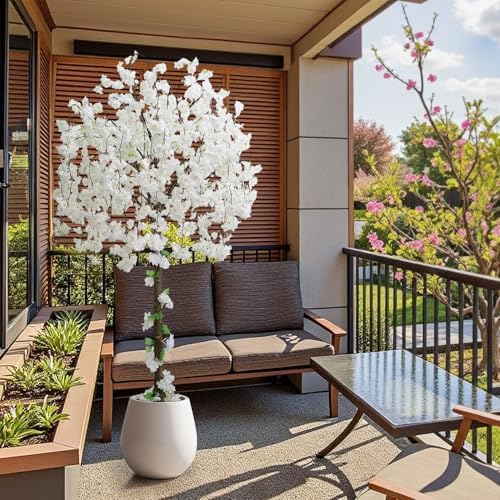
- 【REALISTIC APPEARANCE】:Weeping cherry blossom tree,the trunk has a natural texture and each flower looks full and rich. …
- 【DURABLE MATERIALS】:This sakura tree is made of silk and plastic, blossom tree height 1.8m/6 feet. Comes with a white pl…
- 【EASY ADJUSTMENT】: The 6ft pink faux cherry blossom tree can be separated into a trunk and two parts of cherry blossom b…
8. Dwarf Plum
Plums are prolific producers. Look for ‘Santa Rosa’ grafted onto a dwarf rootstock.

- Why It’s a Winner: Homegrown plums are soft, sweet, and juicy completely different from the hard, mealy ones in supermarkets.
- Pollination: Some plums need a second tree for pollination, but ‘Santa Rosa’ is self-fertile, making it the best choice for small spaces.
9. Dwarf Apricot
Apricots are beautiful trees with heart-shaped leaves and golden fruit. Look for the ‘Pixie-Cot’ variety.

- Why It’s a Winner: They are one of the first fruit trees to bloom and harvest in the season (early summer).
- Winter Care: Because they bloom so early, a late frost can kill the flowers. Since it’s in a pot, simply pull it into the garage if a spring frost is predicted!
Related: Preserve Your Harvest: A Beginner’s Guide to Drying Herbs and Freezing Vegetables
The Apple & Pear Aisle: Crisp and Crunchy
Standard apples need two trees for pollination. However, “Columnar” or “Urban” trees grow straight up like a pole, allowing you to fit two trees in the space of one.
10. Columnar Apple

Varieties like ‘Northpole’ or ‘Golden Sentinel’ grow vertically, rarely getting wider than 2 feet. They bear fruit along the main trunk.
- Why It’s a Winner: You can line them up along a balcony railing or fence to create an edible privacy screen.
- Pollination: You usually need two different varieties to cross-pollinate. Since they are so skinny, you can easily place two pots next to each other on a small balcony.
11. Dwarf Pear
Pears are elegant trees with beautiful spring blossoms. Dwarf varieties handle container life well if pruned annually.

- Why It’s a Winner: Pears ripen off the tree, meaning you pick them hard and let them soften inside. This prevents birds and wasps from ruining the soft fruit on the tree.
- Variety Pick: Look for self-fertile varieties to save space, or check plant tags carefully.
Winter often paints a magical picture. How to Protect Your Plants During Winter
Mediterranean & Tropical Vibes
These trees bring a vacation feel to your home. Many are drought-tolerant once established.
12. Fig Tree

Figs are my absolute #1 recommendation for beginners. Varieties like ‘Brown Turkey’ or ‘Little Miss Figgy’ are incredibly productive.
- Why It’s a Winner: Figs actually prefer having their roots constricted in a pot. It stresses them slightly, encouraging them to produce fruit instead of just leaves.
- Harvest: You often get two harvests: a small one in early summer (Breba crop) and a main harvest in late summer.
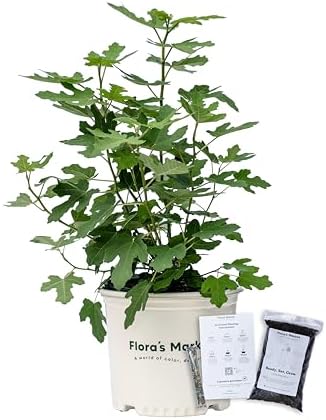
- COMPACT & PRODUCTIVE – This dwarf fig variety produces sweet, medium-sized figs, perfect for small gardens, patios, and …
- LONG HARVEST SEASON – Enjoy a steady supply of delicious figs from late spring through fall, ideal for fresh eating or d…
- LOW MAINTENANCE – Thrives in USDA zones 7–10 and requires minimal care, making it a great choice for beginner gardeners
13. Olive Tree
While olives need specific curing processes to be edible, the tree itself is a design masterpiece.

- Why It’s a Winner: The silvery-green foliage is chic and sophisticated. It’s extremely drought-tolerant and loves hot, sunny balconies.
- Variety Pick: ‘Arbequina’ is a popular fruiting variety that stays smaller and is self-fertile.
14. Pomegranate (Dwarf)
Specifically, you want the ‘Nana’ variety. It stays under 3-4 feet tall.

- Why It’s a Winner: It produces stunning bright orange trumpet flowers that attract hummingbirds. The fruit is smaller than store-bought ones but still edible.
- Conditions: It loves heat. The hotter your balcony, the happier this tree will be.
15. Dwarf Banana
Yes, you can grow bananas in a pot! Look for ‘Dwarf Cavendish’.

- Why It’s a Winner: It gives instant tropical drama with huge, paddle-shaped leaves. It can produce small, sweet bananas if kept warm enough year-round.
- Care: Unlike the others, bananas are thirsty. They need consistent water and heavy feeding to support those giant leaves.
16. Avocado (Dwarf)
Standard avocados get massive, but ‘Wurtz’ (Little Cado) is a true dwarf that thrives in pots.
- Why It’s a Winner: It’s the only way to get homegrown guacamole in a small space. It’s a self-fertile variety (Type A & B characteristics), so one tree can produce fruit.
- Patience Needed: Avocados can take a few years to start fruiting, but the evergreen foliage is beautiful while you wait.
17. Guava (Tropical)
Guava trees (like the ‘Strawberry Guava’) are attractive, small trees with peeling bark and shiny leaves.

- Why It’s a Winner: The fruit smells incredible like a tropical perfume. It’s rich in Vitamin C and very easy to grow if you can keep it frost-free.
- Pruning: They handle pruning very well, so you can shape them into a small tree or a bush easily.
18. Loquat (Japanese Plum)

An underrated gem. It has large, textured, tropical-looking leaves and produces clusters of small, orange fruit.
- Why It’s a Winner: It fruits in late winter or very early spring, providing fresh fruit when nothing else is ready. It’s also evergreen.
- Taste: The fruit tastes like a mix of peach, citrus, and mild mango.
How to Get the Best Results
Growing the tree is only half the battle. Here is how to keep them alive and productive.
1. Pot Size & Material Matters

- Size: Start with a 5-7 gallon pot for young trees, but be prepared to move up to a 15-20 gallon pot as they mature.
- Material: Use plastic or resin for balconies (lightweight). Use glazed ceramic or wood for patios (heavier and more stable in wind).
- Drainage: Ensure multiple drainage holes. Fruit trees hate “wet feet” (roots sitting in stagnant water).
2. The Soil Mix Secret
Never use garden soil in pots; it turns into concrete. Use a high-quality potting mix based on peat or coco coir.

- My Tip: I add 20% extra perlite or pine bark fines to the mix. This increases aeration and drainage, which fruit tree roots absolutely love. Check out our Garden Soil Guide for more.
3. Water & Feed Consistently
- Water: Pots dry out fast. In mid-summer, check them daily. If the top inch is dry, water until it flows out the bottom.
- Feed: Fruit production takes energy. Use a slow-release organic fertilizer (granular) in early spring, and supplement with liquid seaweed or fish fertilizer every 2-3 weeks during the growing season.
Final Thoughts: Your Mini Orchard Awaits

There is something ridiculously satisfying about plucking a lemon or peach from a tree that fits on your balcony. It connects you to nature in a way that buying fruit at the store never can. You don’t need a farm; you just need a pot, some sun, and a little patience.
So pick your favorite from this list, grab a sturdy pot, and get growing. Your future self sipping fresh lemonade or eating homegrown peaches will thank you.
Happy Planting!


